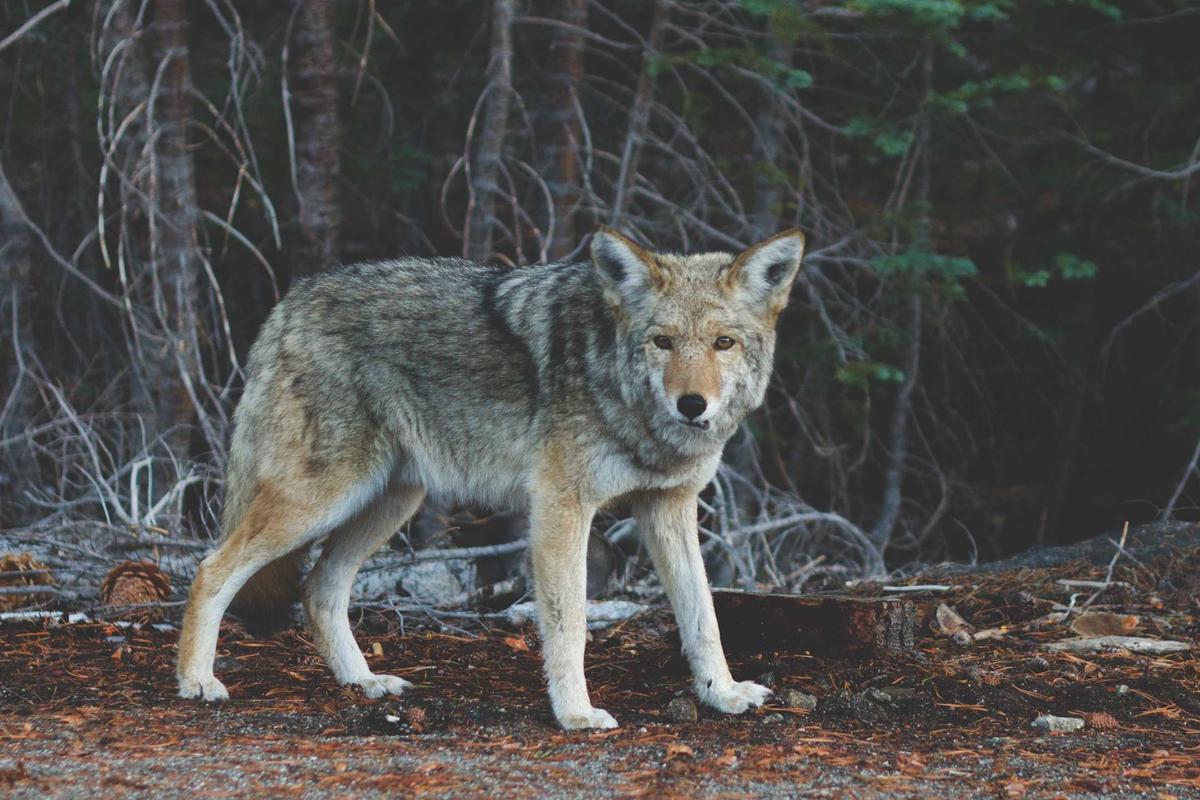
A black bear, a species not native to Japan, has been sighted in the northern region of Hokkaido, sparking panic among local residents and prompting UK wildlife experts to issue a stark warning about climate-driven migration patterns. The bear, likely originating from the Russian Far East or mainland Asia, was first spotted near Sapporo on Tuesday, raiding garbage bins and forcing school closures. While no injuries have been reported, the incident serves as a vivid empirical demonstration of how shifting climate envelopes are redrawing ecological boundaries in real time.
Dr. Helena Vance, Science & Climate Correspondent, reports that the core mechanism is simple: as global mean surface temperature rises by approximately 0.18°C per decade, species must track their preferred thermal niches poleward or to higher elevations. For the Asian black bear, whose habitat historically extends from the Himalayas to the Russian Far East, a warming Hokkaido now offers suitable conditions where snow cover has diminished and food availability has shifted. This is not an isolated incident. Records from the Japan Ministry of the Environment show a marked increase in sightings of southern bird species and tropical insects in Honshu over the past decade. The black bear is merely the latest, and most charismatic, example of a global reality: the biosphere is on the move.
At the same time, UK wildlife experts have drawn direct parallels to domestic risks. The British Ecological Society recently modelled a potential influx of continental species, including the wild boar and the European bee-eater, under a high-emissions scenario. “We are seeing a preview of what could become a systemic challenge for biodiversity management worldwide,” said Dr. Alistair Finch, a senior ecologist at the University of Oxford. “Without coordinated adaptation strategies, we risk not only conservation failures but direct human-wildlife conflicts.”
The term ‘migration crisis’ is apt, but it implies a single species moving from point A to point B. What we are witnessing is a planetary-scale redistribution of life. Plants, insects, birds and mammals are all responding to the same thermal gradient. The result is a churning of ecological communities that can outpace natural evolutionary rates. This is not a future scenario; it is happening now. The UK’s own butterfly populations, for example, have shifted northward by an average of 45 kilometres over the past thirty years.
Technological solutions exist to assist in monitoring and managing these shifts. Automated camera traps with AI identification, connected satellite tracking of tagged individuals, and improved climate envelope models can give us early warning. But these tools require investment and political will. The Japanese bear incident is a textbook case: a single animal caught on a mobile phone camera went viral, but without systematic monitoring, we cannot predict the next event. We are reacting, not preparing.
The data are not ambiguous. The IPCC’s Sixth Assessment Report concluded with high confidence that climate change is already altering species distributions across all major terrestrial, freshwater and marine ecosystems. Every 1°C of warming pushes isotherms roughly 100 kilometres poleward. Current policies put us on track for 2.7°C by 2100. That means we are committing ecosystems to shift distances comparable to the width of the UK. The black bear in Japan is a harbinger of a world where wildlife boundaries become lines drawn in shifting sand.
There is a calm urgency in this message. This is not a call for alarm, but for action. We have the scientific understanding and the technological capacity to adapt. What we lack is the collective will to treat biosphere redistribution as the global security issue it is. The bear will be safely captured or relocated. The larger question remains: will we apply the same logic to the global systems we have already set in motion?