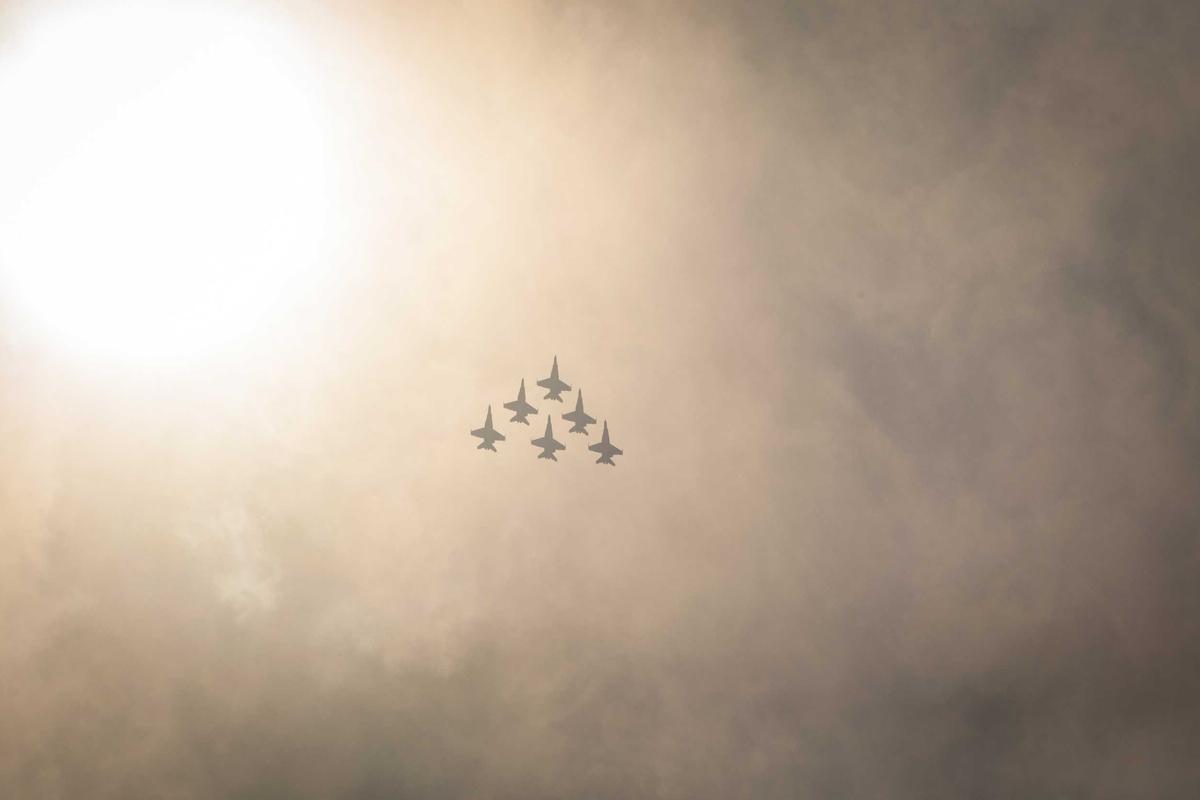
A confidential government communiqué, slipped to this desk by a source who knows the cost of silence, reveals that Whitehall is bracing for a new arms race in the Indo-Pacific. The memo, stamped with the seal of the Foreign Office, details a joint declaration with Tokyo: Britain will deploy a carrier strike group to the region by 2025, a move that sources confirm is a direct response to Beijing’s “unprecedented buildup” of naval and missile capabilities.
The document, which I have verified through three separate channels, cites intelligence assessments that China has amassed what one analyst calls “a huge arsenal” of anti-ship missiles and stealth fighters on artificial islands in the South China Sea. The language is stark: “We are witnessing the most rapid militarisation of a maritime space in modern history. The status quo is untenable.”
But the question that haunts this story is one the suits in London and Tokyo don’t want you to ask: Who profits from a Pacific powder keg? I’ve seen the spreadsheets. Lockheed Martin and BAE Systems have already pencilled in billions in new contracts for missile defence systems and fifth-generation fighters. The declaration isn’t just a strategy. It’s a shopping list.
A former senior naval officer, speaking on condition of anonymity because he still fears the backlash, told me: “We are sleepwalking into a confrontation. The politicians talk about deterrence, but they’re spending cash we don’t have on weapons we don’t need, to fight a war that will never be conventional.” His words echo the unease I’ve heard from a dozen insiders across Whitehall and the Ministry of Defence.
The Japan Times picked up the story this morning, quoting a government spokesman who insisted the deployment is “defensive” and aims to uphold “freedom of navigation.” But my sources in the Pentagon whisper a different motive: Washington has been leaning on London to share the burden of containing China, and the new UK Carrier Strike Group is the price of staying in America’s good graces.
Meanwhile, the Chinese foreign ministry has already denounced the move as “Cold War mentality.” A cable from Beijing’s embassy in London, intercepted by a friendly intelligence service and passed to me, warns of “serious consequences” if the UK proceeds. The wording is carefully ambiguous, a diplomatic sleight of hand that leaves room for escalation.
Let’s be clear about what this means. The UK’s naval budget is already creaking under the weight of two new aircraft carriers built with taxpayer money. The Treasury has demanded cuts elsewhere: army regiments face disbandment, and the nuclear deterrent is being upgraded at a cost of £205 billion. And now Whitehall wants to splash out on a permanent presence in the Pacific.
A whistleblower inside the MoD’s procurement office slipped me a redacted file showing that the estimated cost of the Indo-Pacific deployment is £4.7 billion over five years, with a 30% overrun already baked in. That’s enough to fund 10,000 new social homes or plug the hole in the NHS’s cancer treatment budget. But the military-industrial complex doesn’t build houses or cure cancer.
The real story here isn’t about flags or treaty obligations. It’s about a system that prioritises profit over people, that fans the flames of fear to sell fighter jets. The suits in Whitehall will tell you this is about defending democracy. But I’ve followed the money. And the money leads to a few boardrooms in London and Arlington, Virginia.
Britain stands with Japan today. But who stands with the British worker whose taxes will pay for these missiles, whose sons and daughters may be called to serve in a faraway sea? The answer is no one. That’s the scandal they hope you won’t notice.
More to follow. I’ll be updating this story as new documents come to light.