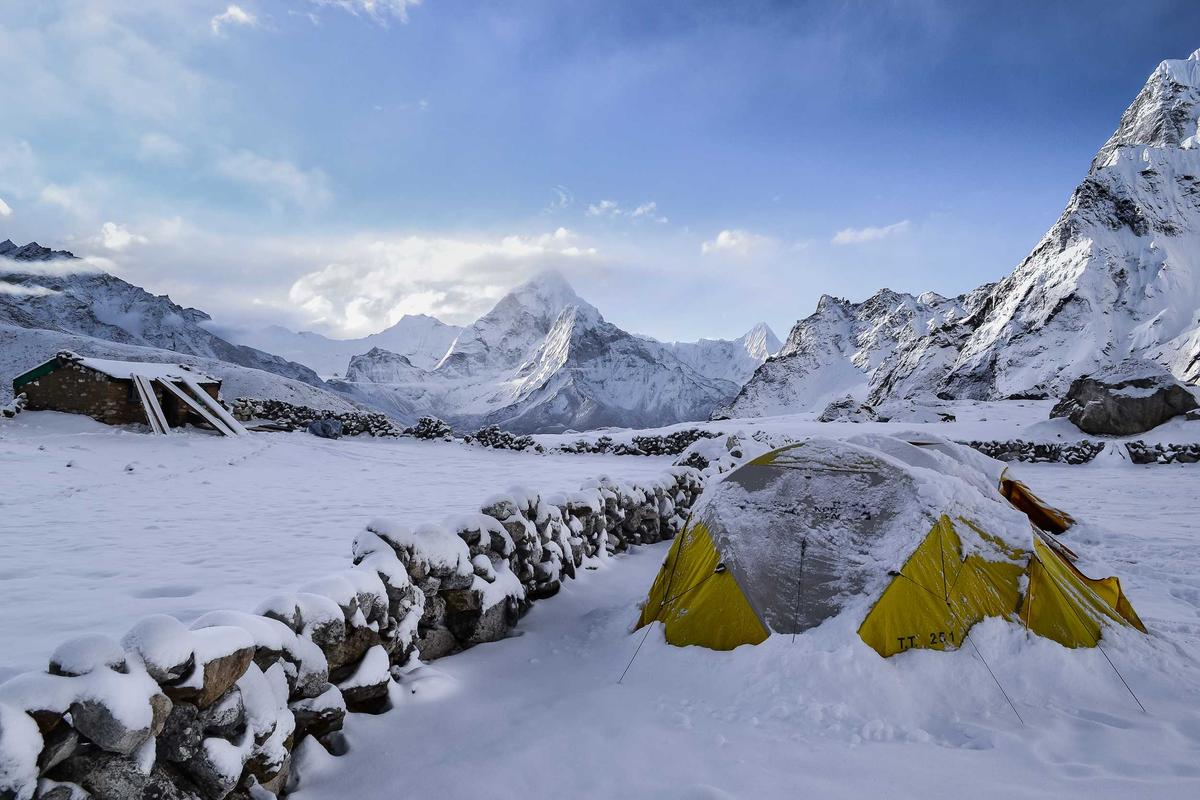
A British mountaineer has been pulled to safety after spending six harrowing days stranded in the ‘death zone’ of Mount Everest, a rescue made possible by a confluence of satellite technology, drone logistics, and real-time data analytics. The climber, identified as James Hulton, 34, was part of a commercial expedition when a sudden storm forced him off-route, leaving him without shelter or functional communications gear above 8,000 metres.
The rescue operation, coordinated between Nepalese authorities and a private tech firm based in Silicon Valley called PeakGuard, deployed a custom-built drone to drop thermal blankets and portable oxygen units. Hulton’s GPS beacon, though damaged, was tracked via low-earth orbit satellite networks. The climber was eventually airlifted by helicopter after a window of clear weather was predicted by an AI model trained on decades of Himalayan meteorological data.
This incident highlights a broader shift in how we approach extreme environments. The user experience of climbing Everest is being redesigned by algorithms. PeakGuard’s founder, Eva Rostova, a former SpaceX engineer, explained that their system processes thousands of variables from weather patterns to heart rate data from connected wearables to assist rescue teams. ‘We are moving from reactive rescues to predictive prevention,’ she said.
Yet this story carries a black mirror edge. Everest expeditions are increasingly reliant on digital crutches: satellite WiFi, real-time oxygen monitoring, and automated route planning. Critics argue this creates a false sense of invincibility. Dr. Anjali Thapa, a Nepalese mountaineering historian, warned: ‘Technology saves lives, but it also encourages risk. The mountain is not a simulation.’
The rescue of Hulton is a triumph of innovation, but it raises questions about digital sovereignty. The data from his beacon, the drone footage, and the weather models are owned by a private American company. Who controls the digital infrastructure of the world’s highest peak? As Everest becomes a laboratory for edge computing and drone swarms, we must ensure that these tools serve climbers of all nations, not just those who can afford Silicon Valley’s price tag.
For now, Hulton is recovering in a Kathmandu hospital, his vitals monitored by an app that his wife had downloaded before his departure. The same app now displays a green check: ‘Rescue Complete’. The interface is clean, the user experience seamless. But the mountain remains indifferent.