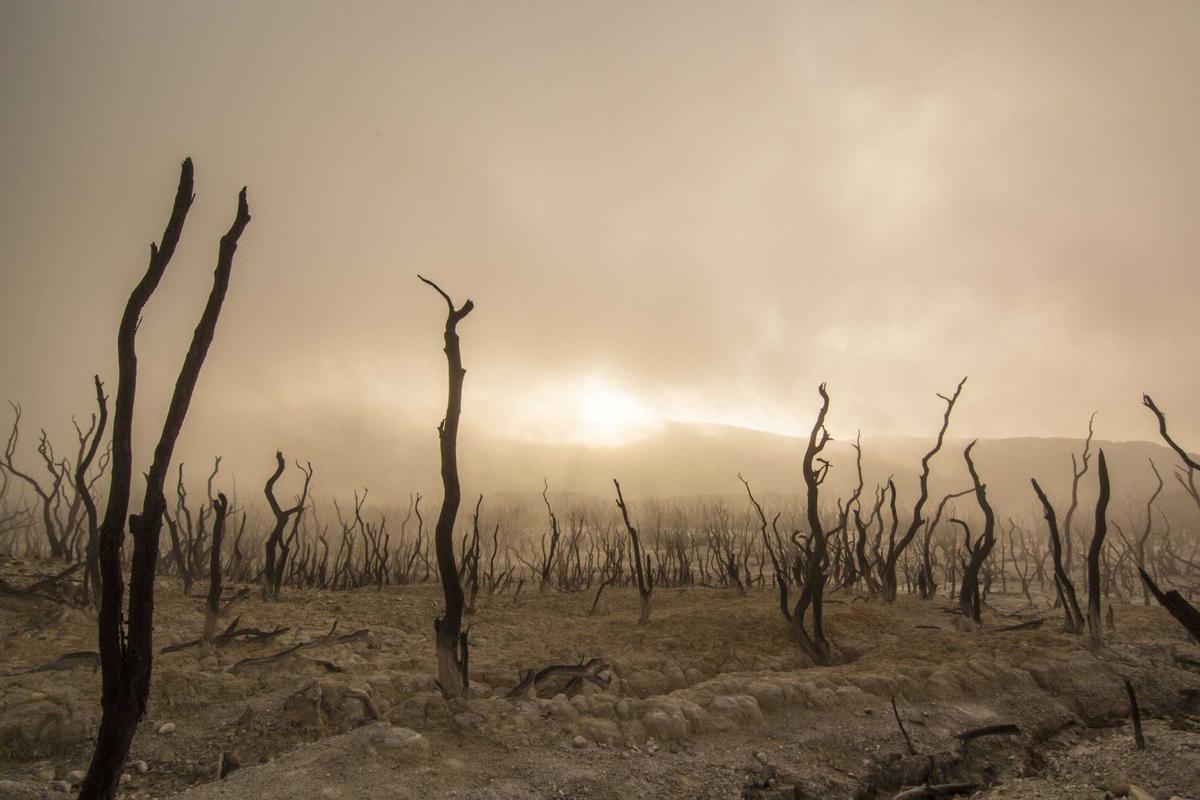
An earthquake has struck Caracas. Buildings have pancaked. Lives are lost. And the British embassy, in a flurry of bureaucratic efficiency, has dispatched a crisis team. One must applaud the swiftness, the professionalism, the stiff upper lip in the face of geological fury. But as the dust settles on the Venezuelan capital, I find myself less concerned with the Richter scale reading and more with the metaphorical tremors this event sends through our own brittle civilisation.
Let us first acknowledge the obvious: earthquakes are natural, but the carnage they wreak is profoundly political. Caracas, like so many cities in the developing world, is a monument to corruption and incompetence. Buildings are erected without regard for seismic codes, with cheap materials and cheaper labour, all under the approving gaze of a government more interested in maintaining its grip on power than in protecting its citizens. The result is a city of dominoes waiting for a nudge. And when the nudge comes, as it did today, the West tuts, sends aid, and then returns to its moral slumber.
But I am not here to merely kick the Venezuelan corpse. I am here to hold up a mirror to my own country. The British embassy’s reaction is a marvel of modern statecraft: a crisis team, no doubt equipped with tablets, satellite phones, and a deep well of empathy. But what does this say about us? We are a nation obsessed with emergency response, with the immediate, with the manageable crisis. We have perfected the art of the fire drill while the house burns down around us. Our intellectuals wring their hands over climate change, inequality, and the decline of the West, yet our governments, like the Venezuelan regime, focus on the symptom rather than the disease.
The earthquake in Caracas is a reminder of the fragility of the human-built world. But it is also a reminder of the fragility of our own polite societal arrangements. We look at Venezuela and see a failed state. We should look at the United Kingdom and see a state in decline, albeit a more comfortable one. Our buildings may not pancake, but our institutions are crumbling. Our trust in government is eroding. Our national identity is dissolving into the ether of multiculturalism and globalisation.
I am not suggesting that we should abandon crisis teams or refuse aid to the suffering. That would be monstrous. But I am suggesting that we should pause and consider the deeper rot. The British embassy’s crisis team is a Band-Aid on a bullet wound. The wound is the hubris of modernity, the belief that we can engineer our way out of any problem, that technology and bureaucracy can substitute for virtue and resilience.
The Victorians understood this. They built empires and cathedrals, but they also built character. They faced cholera outbreaks and political upheavals not with crisis teams but with a sense of duty and a belief in moral progress. We, by contrast, have crisis teams and professional empathy. We have replaced the stiff upper lip with the trembling lower lip. We send aid to Caracas while our own cities seethe with discontent and our own souls are hollowed out by consumerism and digital distraction.
So let us honour the dead in Caracas by refusing to look away. But let us also honour them by refusing to be satisfied with the theatre of crisis management. The earthquake is a crack in the earth, but it is also a crack in the facade of our civilisation. Whether we choose to fill that crack with concrete or with truth is up to us.
And as the British embassy’s crisis team touches down in the rubble, I ask: what crisis team will save us from ourselves?