The art world has a curious relationship with silence. We fetishise the public memorial, the grand retrospective, the wall of words from critics. But for David Hockney, who was laid to rest in a small, private ceremony this week, the understatement feels almost fitting. He spent a lifetime teaching us to look more closely, to strip away the noise and rediscover the sheer, joyous act of seeing. And in his final act, he has reminded us that some observations are best made without an audience.
Hockney was not just a painter. He was a philosopher of vision. From the sun-drenched Californian swimming pools that made him a pop-art icon to the Yorkshire landscapes he captured with such emotional rawness, every canvas was a question: How do we see? What happens when we truly pay attention? His iPad drawings, his stage designs, his explorations of Cubist space, they were all part of a single, lifelong inquiry. He wanted to break the lazy contract between an eye and a scene.
But to understand Hockney’s true impact, you must look beyond the joy. There was always a rigorous intellect at work. He was a technologist in painter’s clothing, from his early experiments with photocopiers to his embrace of the iPhone as a legitimate artistic tool. He saw the digital revolution not as a threat to traditional art, but as a new set of lenses. He would have understood our current anxieties about AI-generated imagery. His work was a constant argument that the soul of art is the human observer in the room, a sentient filter that no algorithm can replicate.
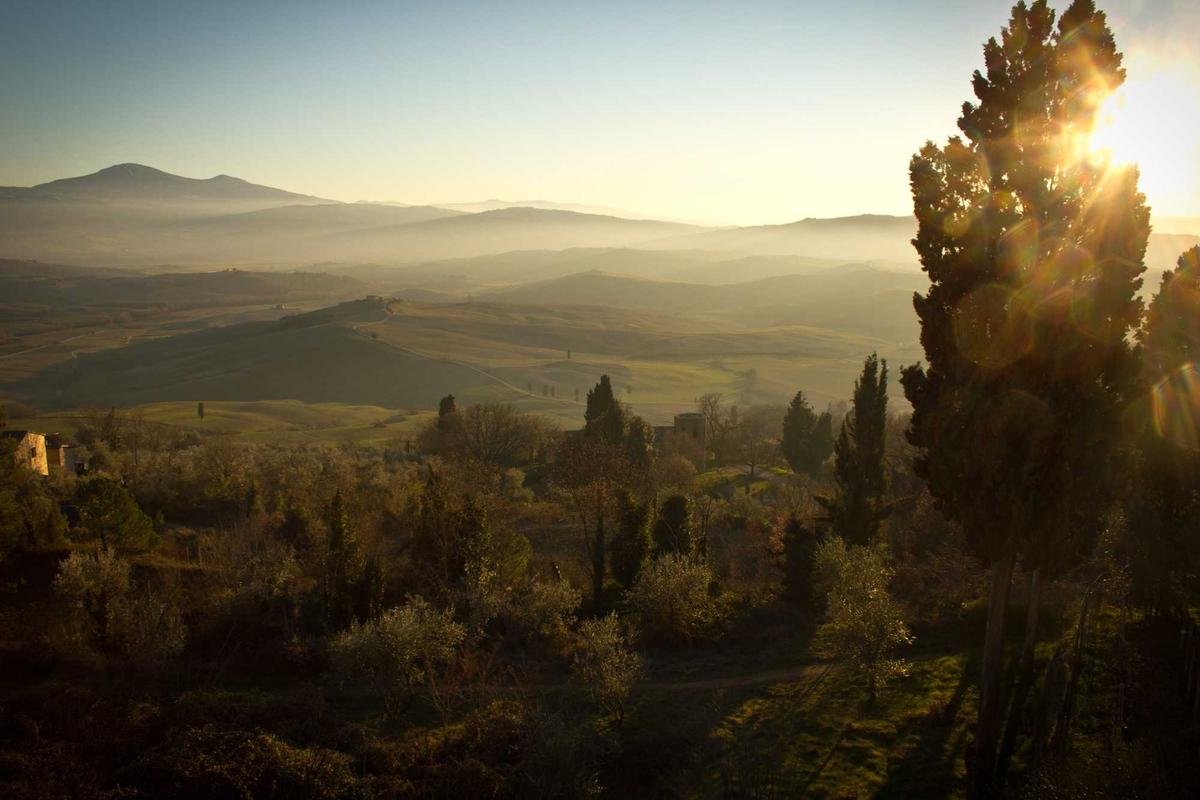
His legacy is also a quiet rebuke to the culture of digital overload. In an age of infinite scroll and fleeting images, Hockney painted slowly. He returned to the same motifs, the same trees, the same humble views across the Yorkshire Wolds, again and again, watching the light change over hours, days, seasons. He gave us permission to be bored with a single image, to let it sink in. That act of patient looking feels radical now. It is a form of digital sovereignty, a refusal to let the device dictate how we consume beauty.
The funeral, held with only family and close friends, was a Hockney-esque gesture. No grand stage, no universal applause. Just the quiet passing of a man who knew that the deepest connections are intimate ones. The tributes, of course, will be loud and global. Museums will scramble for retrospectives. But perhaps the true memorial is not on a gallery wall but in the way we now pause to watch a tree shake in the wind, the way we cannot help but see the world in his colours.
There is a painful irony in his loss landing at this precise moment. As we stand on the precipice of a new technological age, grappling with the ethics of artificial intelligence and the dismantling of trust in the collective image, we need Hockney’s discerning eye more than ever. He was a guardian of the authentic gaze. He reminded us that a picture is not evidence, it is a proposal. It is an invitation to look again.
We will not see another like him. But as the algorithms grow smarter and the screens get sharper, perhaps the greatest tribute is to shut them down. To walk outside. To look at a single leaf. To see it as if for the first time. That is David Hockney’s final algorithm. And it is the one we must choose to run.