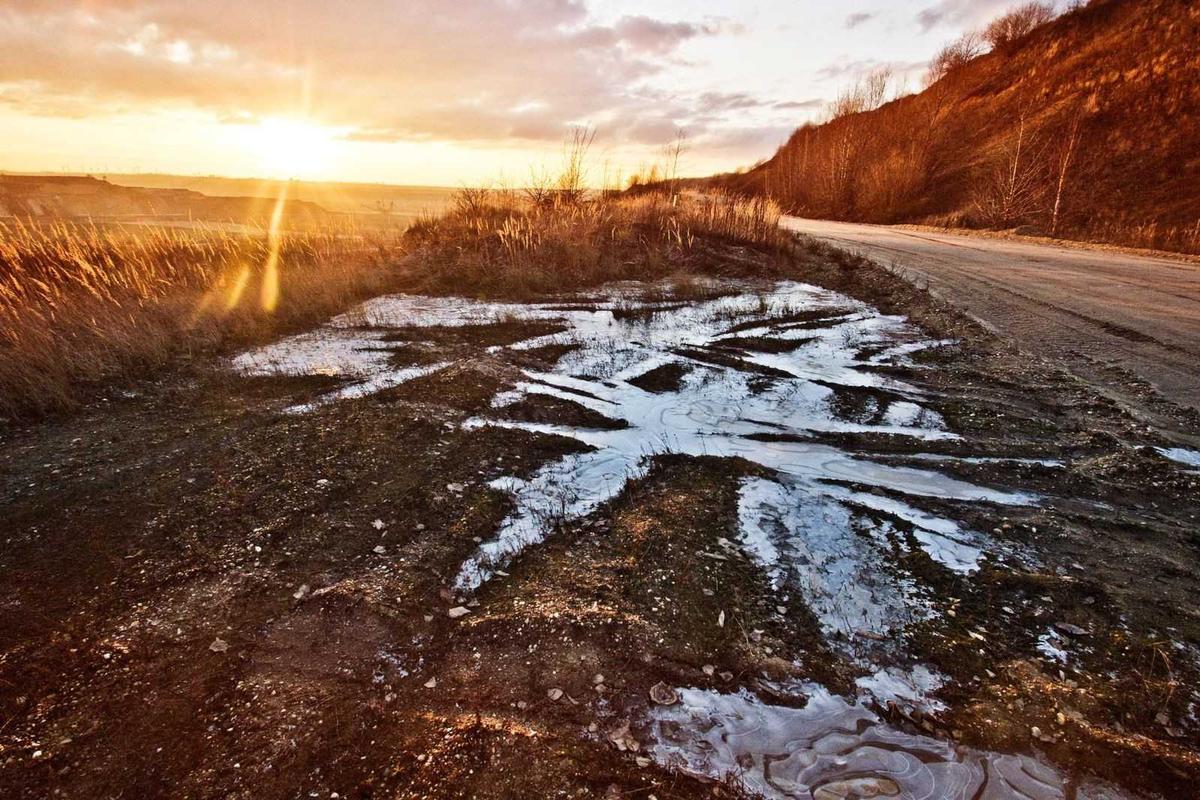
The meteorological station at Phalodi, Rajasthan, has just clocked 47 degrees Celsius. That is not a forecast. That is a measurement. It is a number that renders the word ‘heatwave’ almost comically inadequate. It is a datum point in a biosphere that is, with each passing year, losing its capacity to buffer human settlement from its own physical extremes.
Meanwhile in the United Kingdom, a nation historically accustomed to drizzle and moderation, the Government’s National Resilience Strategy is being quietly dissected. On paper, the plan acknowledges that climate change is happening. It mentions ‘adaptation’. It even uses the word ‘urgency’. But examine the fiscal lines: the budget for flood defences is real, but the investment in cooling infrastructure for hospitals, in rewilding uplands to slow runoff, in retrofitting housing stock for 40-degree days? That is thinner. Much thinner.
The 47C in Phalodi is not a freak occurrence. It is a signal. In climate physics, we model these signals using probability density functions. The mean of the distribution is shifting. The variance is widening. What was a one-in-a-hundred-year event in 1970 is now a one-in-five-year event. For India, the human cost is immediate: labour productivity collapses, crop failure accelerates, and the urban poor cannot afford the electricity to run a fan. But the UK cannot afford to watch this from a distance. The same jet stream dynamics that park a heat dome over the Indus valley also produce stalled weather patterns over the North Atlantic. The same ocean currents that warm the Indian Ocean are connected to the ones that keep the UK’s winters mild. A biosphere is not a collection of separate countries. It is a single, coupled system. When one part screams, the whole apparatus groans.
What does resilience mean when 47C becomes a global benchmark? It means hospitals must be able to keep medicines cool during a blackout. It means train tracks must not buckle at 40 degrees. It means urban trees are not decorative: they are necessary evaporative cooling infrastructure, as vital as pipes. The UK’s Climate Change Committee has warned that current adaptation efforts are ‘not keeping pace’. That is diplomatically phrased. The reality is that the UK is preparing for a world that no longer exists.
The technical fix exists. District cooling networks, phase-change materials in buildings, solar-powered cold chains for food. But these require capital expenditure now, not after the next election cycle. The National Resilience Strategy needs a section that begins: “Given a high probability of summer temperatures exceeding 45C in the UK by 2050, we will…” and then list concrete actions. That section is missing.
As a climate correspondent, I do not traffic in panic. But I do insist on honesty about physical limits. The Earth’s energy imbalance is not a political opinion. It is a measurable quantity: about 0.9 watts per square metre more incoming than outgoing radiation. Most of that energy goes into the oceans, but a fraction heats the land. In Phalodi, that fraction has tipped a city into a state that medicine classifies as incompatible with prolonged human activity.
The UK’s resilience is being tested indirectly today. The true test will come when the jet stream takes a different configuration and the heat dome parks over the home counties. The question is not whether it will happen. It is whether the planning will have been done. Right now, the data suggests the answer is no.
Temperature records are not headlines. They are measurements of a planet under thermal stress. The 47C in India is a measurement. The UK’s lack of preparation is a choice. One of these is physics. The other is politics. They will meet soon.