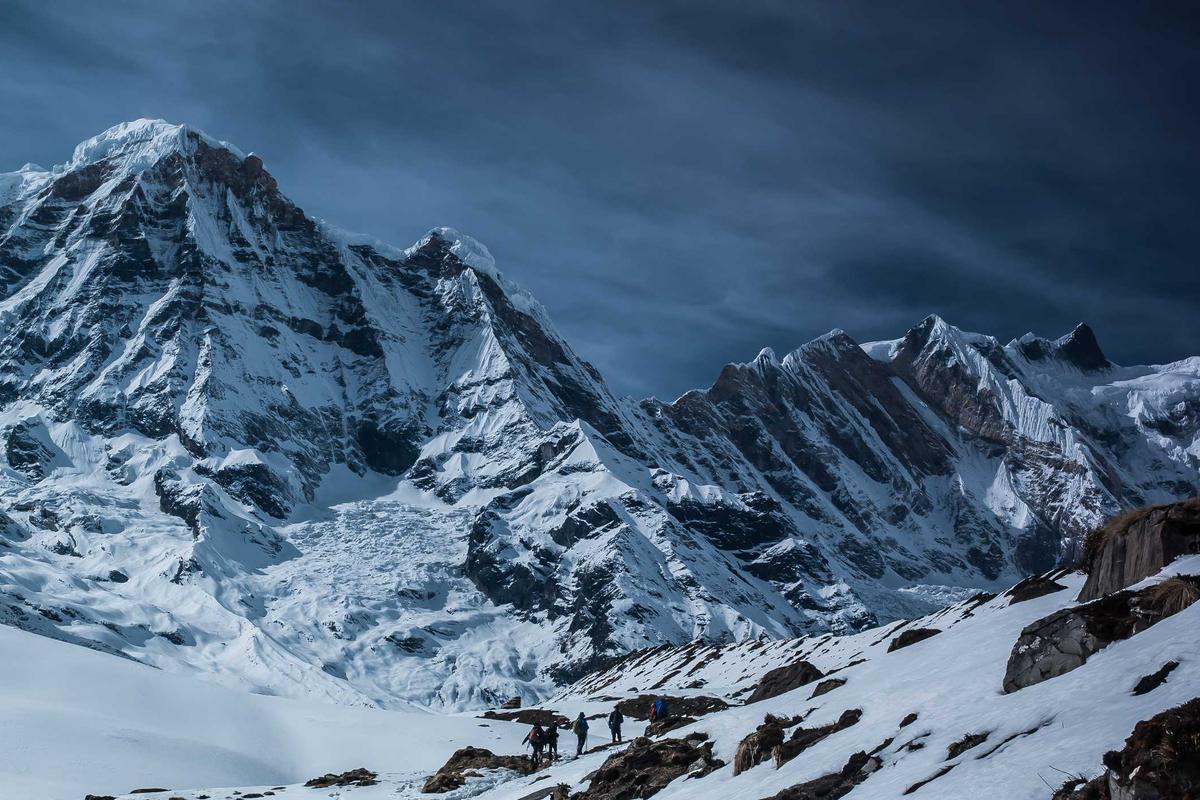
In a stark reminder of the thin line between life and death at high altitude, a Mount Everest guide has been rescued after surviving six days alone above 8,000 metres on a diet of chocolate bars and melted ice. The unnamed guide, part of a commercial expedition, became separated from his team during a sudden storm and was forced to hunker down in a crevasse. UK mountaineering bodies have praised his mental fortitude and survival skills, but the incident raises troubling questions about the increasingly commercialised nature of Everest climbs.
The guide, a Nepali Sherpa in his 30s, was last seen near the Hillary Step when a ferocious squall rolled in. His team assumed he had perished, a grim reality of the death zone where hypoxia and exposure can claim lives in hours. Yet he endured, rationing two chocolate bars and drinking ice melt. Rescuers found him with mild frostbite and severe dehydration but alive. The Royal Geographical Society described it as a testament to human endurance, while the British Mountaineering Council urged a renewed focus on safety protocols.
As a technology and innovation lead, I cannot help but see the parallels with our own digital survival. We are all guides on a metaphorical Everest of data, algorithm, and automation. We talk about resilience in code and infrastructure, but here is a man who survived with the most primitive of resources. His battery was not a lithium-ion pack but a human will. His GPS was a memory of the route. This is the user experience of society at its most raw: the ultimate low-tech survival.
The incident also highlights the ethics of modern mountaineering. Everest has become a factory floor for summiteers, with queues in the death zone and oxygen bottles tossed aside like single-use plastics. Our obsession with scaling and conquering mirrors the tech world's drive to summit every peak without asking if we should. The guide's survival is a miracle, but it should not have been necessary. We need fail-safes, redundancy, and a fundamental respect for the environment. The same applies to our digital ecosystems. We cannot continue to push boundaries without ensuring safety nets.
Quantum computing, artificial intelligence, digital sovereignty: these are the new Everest. We are in the early stages of a climb that will define our species. But we must not forget the human element. The guide's six days on chocolate and ice is a parable. It reminds us that technological prowess is hollow without basic resilience. The UK mountaineering bodies are right to hail his survival, but let us also hail a call for change. Let us build systems that are not just efficient but humane. Let us prepare for the storms that will inevitably come.
As we look to the future, this story of survival should serve as both inspiration and warning. The guide is recovering in a Kathmandu hospital. His name may never be widely known, but his ordeal should be etched into our collective consciousness. It is a lesson in simplicity, guts, and the power of the human spirit. It is also a challenge to ensure that our technological ascendancy does not lose sight of the fundamentals. For in the death zone of innovation, chocolate and ice are sometimes all you have.