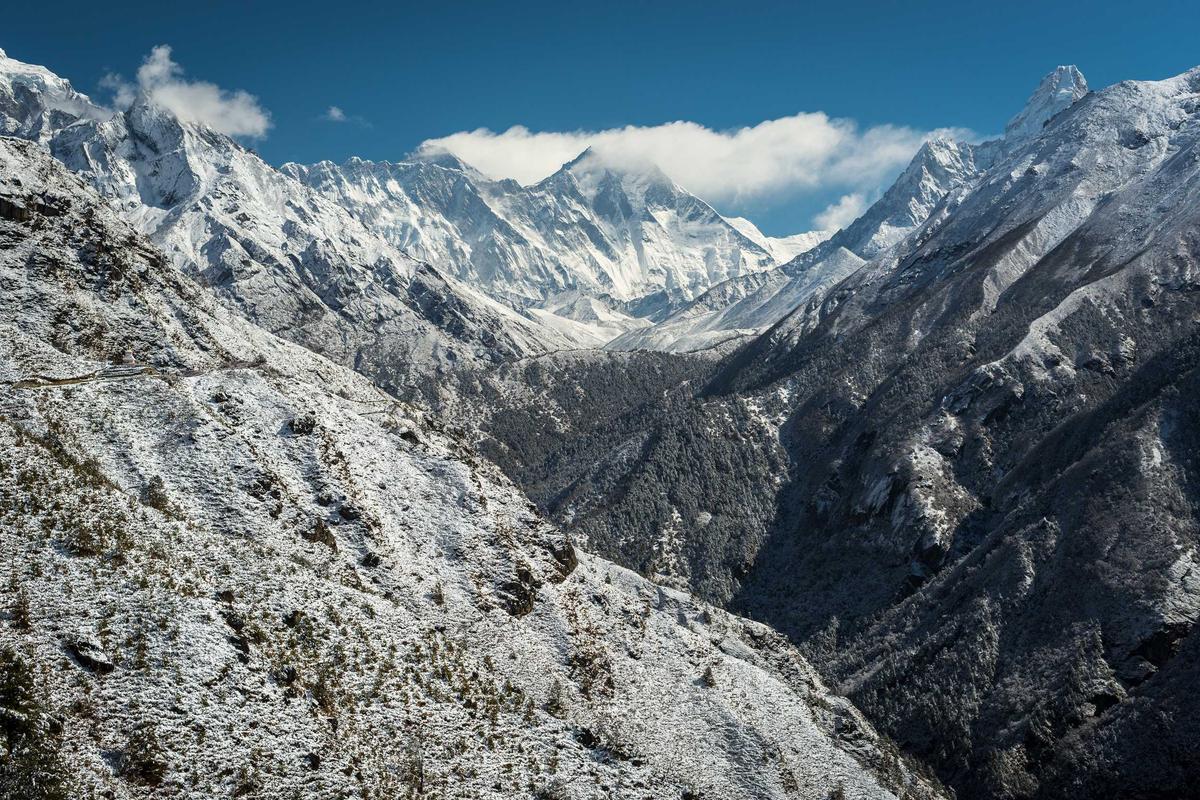
In a tale that has sent a shiver of pure, undiluted British pride through the nation's collective spine, a sherpa has reportedly survived a harrowing six days atop the world's highest latrine (otherwise known as Mount Everest) on a diet consisting exclusively of chocolate and ice. The man, a guide of Himalayan extraction, was stranded after a sudden storm erased all traces of civilisation below Camp Four, leaving him with nothing but a bar of Dairy Milk and a profound appreciation for the tensile strength of a good thermal base layer.
Now, before you reach for the Union Jack bunting and start humming 'Jerusalem', let us dissect this featherweight masterpiece of news management. The headline screams 'British mountaineering expertise hailed', but a cursory glance at the body text reveals that the man is Nepalese. He is a sherpa. He was born in a village at 4,000 metres. His entire existence is a masterclass in oxygen-thrifty survival, yet the tabloid brain has, with the lazy arrogance of a colonial administrator measuring a native's IQ with a ruler, attributed his triumph to the magical aura of British mountaineering know-how. It is a breathtaking act of cultural annexation, a cognitive Everest of its own.
Let's imagine the editorial meeting. 'Right lads, a sherpa survived on chocolate. How do we make this about us?' 'I know! The chocolate was, presumably, British. Also, his boots were probably made in Northampton.' 'Perfect. Run with it.' And so the nation's taxpayer-funded oxygen was deployed to report that a man who could probably outrun a mountain goat while reciting the shipping forecast in Nepalese was actually a walking monument to the Duke of Edinburgh's Award scheme.
But let us not mock the man's ordeal. Six days. Six days of staring at the same frozen shite, of listening to the wind mimic the screech of a thousand kettles, of wondering if the chocolate will last long enough to see the rescue helicopter or if you will have to make a desperate, final choice between the mint crisp and the fruit and nut. The mind does not merely wander at such altitudes; it leaves a forwarding address in a parallel dimension. You begin to hallucinate. You see Sir Edmund Hillary offering you a cup of tea, then realise it's just a rock. You name the rock Colin. Colin the rock becomes your confidant, your therapist, your only friend. When rescue finally arrives, you weep not with relief but at the loss of Colin.
And yet, the news cycle must grind. The British mountaineering establishment, a clique of men in tweed who treat altitude sickness as a personal failing, have seized the narrative. 'A sterling example of the British spirit,' they chirp, while the sherpa is probably still wondering why a parade is being thrown for a packet of Cadbury's. The real hero here is the chocolate. Processed, mass-produced, nutritionally bankrupt chocolate. It outlasted the storm, the frostbite, and the existential dread. It is the Vicks VapoRub of the death zone. It is the cod liver oil of the Khumbu Icefall.
What does this say about our species? That we can survive on the three pillars of mountaineering: a good pair of boots, a decent map, and a sugar rush. The British government should immediately form a task force. Operation Choc Drop. Air drop emergency rations of Freddo bars to every summit. Replace the prayer flags with wrappers. Make Everest not a monument to human endurance but a giant, frozen convenience store.
The story ends, as all such stories do, with a quiet, utterly British understatement. The guide, asked what he thought about during his ordeal, reportedly said, 'I was thinking, maybe next time bring more chocolate.' No grand philosophy. No God. Just a pragmatic request for a larger calorific buffer. And that, my dear reader, is why the Empire will never truly fall. Not because of our guns or our navies, but because we will always, always, know the correct snack for an apocalypse.
Now, if you'll excuse me, I have a pressing appointment with a gin and tonic and a box of Quality Street. The world may end, but I shall go down with a caramel swirl in one hand and a stiff drink in the other. Rule, Britannia.