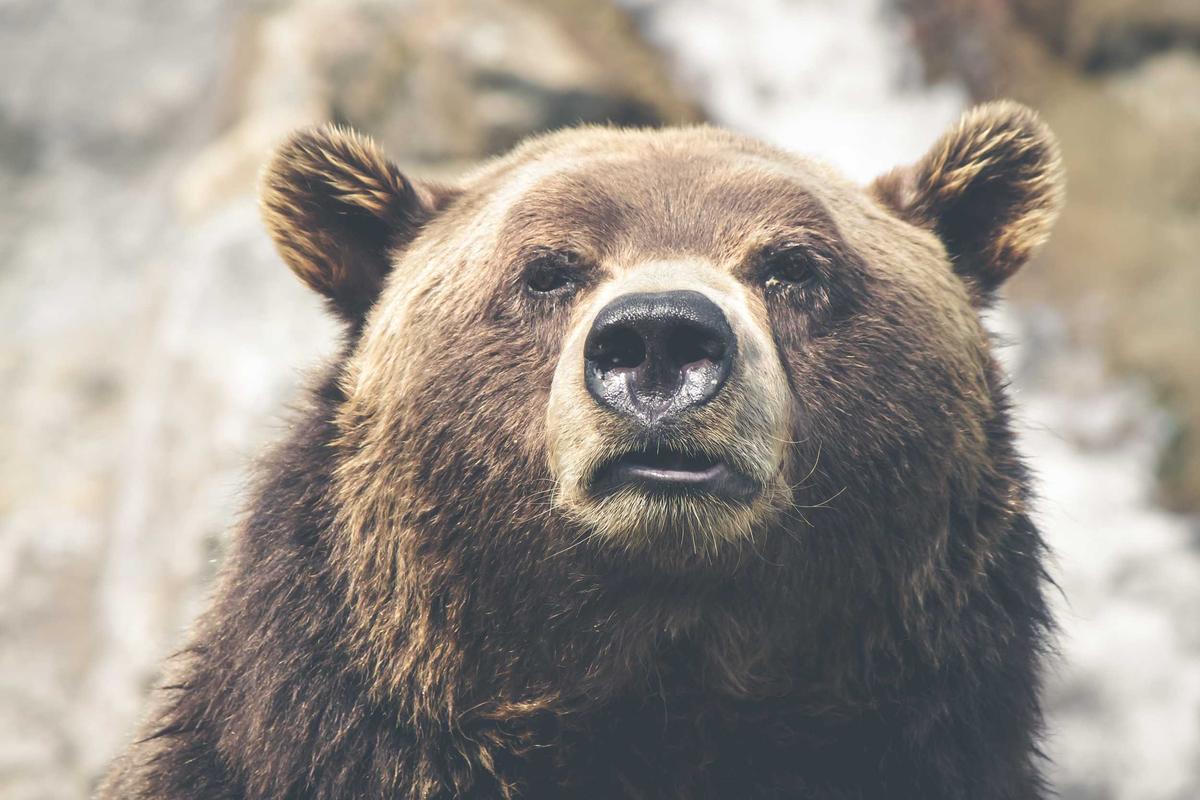
A bear described by local authorities as 'extremely intelligent' remains at large in northern Japan after attacking four people, prompting the deployment of UK animal behaviour specialists. The incident, unfolding in the rural town of Shibetsu in Hokkaido, has captivated international attention and underscored the complex challenges of human-wildlife conflict in a rapidly changing environment.
The bear, believed to be a male Ussuri brown bear, first came into contact with humans on October 12, when it injured a 74-year-old man in a forested area. Over the subsequent days, three more individuals were attacked, including a farmer and two hikers. All victims were transported to hospital with non-life-threatening injuries. However, the bear's evasive tactics have frustrated local hunting teams and police, who have set traps and conducted foot patrols with little success.
'This animal demonstrates behaviours we typically associate with high cognitive ability,' said Dr. Helena Vance, Science & Climate Correspondent. 'It avoids previously set traps, changes its movement patterns, and appears to understand human routines. This is not ordinary bear behaviour.' Indeed, reports indicate the bear has learned to detect and avoid camera traps, and has altered its feeding habits to remain hidden. Local officials have termed the animal 'extremely intelligent', a phrase that has given rise to a torrent of media speculation.
The decision to bring in UK experts from the Animal and Plant Health Agency (APHA) highlights the severity of the situation. These specialists are trained in large carnivore management and have experience with problematic bears in North America and Europe. Their role will be to advise on capture or deterrence methods without resorting to lethal force, though local authorities have not ruled out shooting the bear if it poses an immediate threat.
From a broader perspective, this incident is a microcosm of global challenges in an era of ecological disruption. As climate change alters habitats and food availability, bears and other large mammals are increasingly venturing into human settlements. In Hokkaido, where bear populations have rebounded due to conservation efforts, encounters have tripled in the past decade. 'We are seeing a global trend of wildlife moving closer to human populations,' said Dr. Vance. 'This is not just a Japanese problem. It is a symptom of biosphere collapse and the pressure we are placing on natural systems.'
The UK experts bring with them techniques grounded in behavioural ecology and non-lethal conflict resolution. They may deploy specialised fencing, aversive conditioning using loud noises or projectiles, or traps designed to capture the bear safely for relocation. However, the bear's high intelligence complicates these measures. 'It has already outsmarted standard traps,' noted Dr. Vance. 'We are now in a race to apply more sophisticated approaches before further injuries occur.'
The story has resonated widely on social media, where the bear has been nicknamed 'Ninja Bear' for its stealth. Some have called for the bear to be spared, arguing that its intelligence should be protected. Dr. Vance cautions against anthropomorphism: 'The bear is not a villian nor a hero. It is a wild animal behaving as its instincts dictate. Our response must be guided by science and safety, not sentiment.'
As the search continues, the global community watches. The outcome in Shibetsu may set precedent for how we manage intelligent wildlife in an increasingly crowded world. For now, the bear remains on the run, a testament to both the resilience of nature and the limitations of human control.