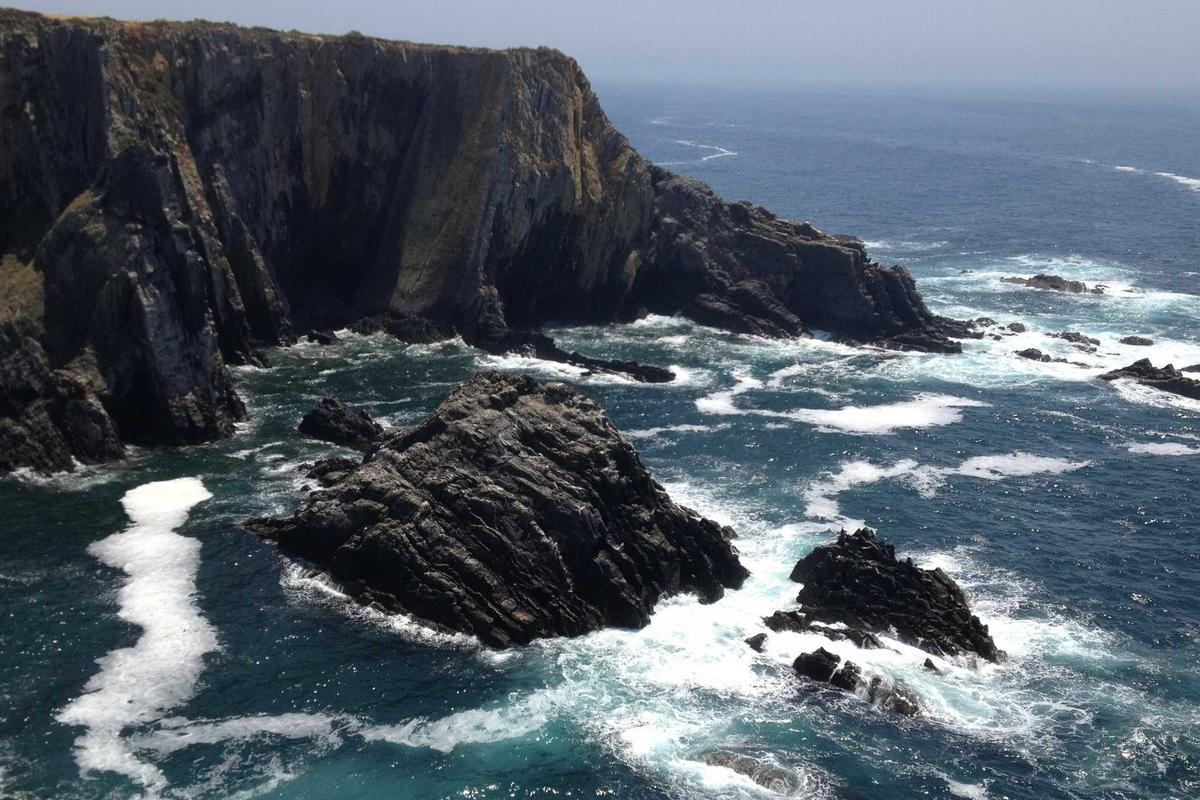
In a discovery that rewrites our understanding of ancient marine ecosystems, palaeontologists have unearthed a graveyard of whales in a remote coastal region. The site, dated to approximately five million years ago, contains the fossilised remains of dozens of the giants, preserved in remarkable detail. The find offers a haunting snapshot of a mass stranding and the subsequent scavenger feast, but beyond the spectacle, it is a data-rich time capsule for climate science.
The excavation team, led by Dr. Elena Marchetti of the University of Bristol, stumbled upon the first bones while surveying geological formations in a now-dry basin. What they found was staggering: layer upon layer of whale skeletons, some over 15 metres long, stacked as if in a prehistoric morgue. "This is the largest and best-preserved assemblage of its kind," Dr. Marchetti said. "The conditions suggest a catastrophic event, possibly a toxic algal bloom or a sudden shift in ocean currents, which drove these creatures to shore."
But the significance extends far beyond the whales themselves. The fossils are encased in sediment that acts as a high-resolution climate archive. By analysing the chemical signatures in the bones and surrounding rock, researchers can reconstruct sea temperatures, salinity levels, and even plankton populations from the Pliocene epoch. This period is particularly critical for understanding our own warming world: it was the last time atmospheric carbon dioxide levels were as high as today, leading to ice-free Arctic summers and sea levels 25 metres higher.
"We are essentially looking at a natural laboratory for future climate scenarios," explained Dr. Raj Patel, a geochemist at the University of Cambridge. "The whale graveyard is a grim reminder of what happens when oceanic systems tip. But it also tells us how resilient life can be. Some species in that era adapted; others vanished."
The find also has a digital sovereignty angle. The team has committed to open-data principles, making every 3D scan and chemical measurement freely available online. This is a conscious effort to democratise palaeontology, a field often gate-kept by elite institutions. "We want the world's researchers, not just those in wealthy labs, to interrogate this data," said Dr. Marchetti. "Scientific progress should not be a walled garden."
Yet the ethical questions are as deep as the geological strata. As we uncover these ancient deaths, we are forced to confront our own role in modern mass extinctions. The very technology that enables this discovery satellite imaging, DNA sequencing, AI pattern recognition is also driving the industrial expansion that accelerates climate change. There is a Black Mirror irony here: we use the tools of our own potential demise to study the demise of others.
For now, the graveyard remains a source of wonder, not warning. The skeletons will be displayed in a new museum designed to let visitors walk among them, an experience that Dr. Marchetti hopes will inspire awe but also action. "We are not just looking at fossils. We are looking at our future if we do not course-correct."
As the excavation continues, the team expects to find more species: ancient dolphins, seals, and even the ancestors of modern whales. Each bone is a pixel in a larger picture of a world that was, and a world that could be again. The user experience of society, on this overheating planet, depends on how well we read this data.
For now, the graveyard whispers a five-million-year-old cautionary tale, one we are only beginning to decipher.