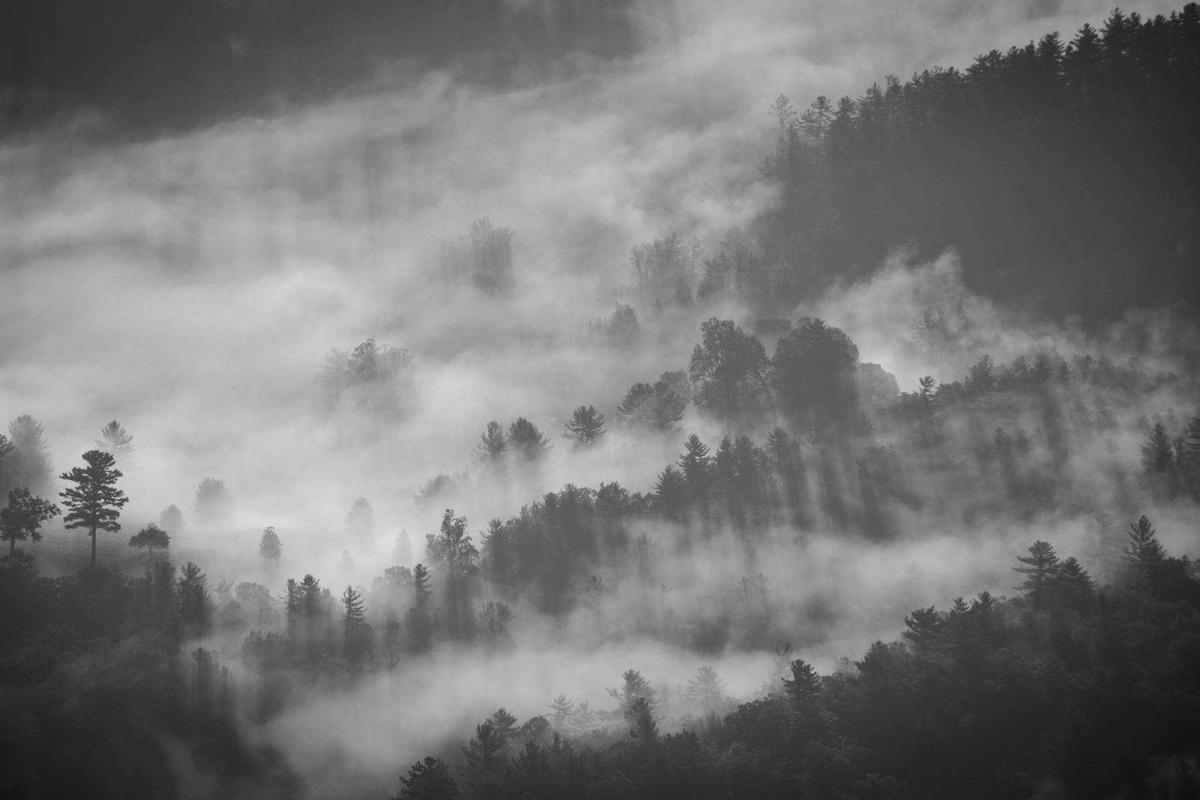
In what conservationists are calling a 'catastrophic and entirely predictable' event, a four day deluge in the forests of northern Sumatra has killed an estimated 7% of the world's remaining Tapanuli orangutans. The flash floods, triggered by rainfall three standard deviations above the historical mean for the season, swept through a 200 square kilometre fragment of lowland forest that serves as the primary habitat for the critically endangered species. Only 800 individuals were thought to survive before the floods. Now, that number has dropped by at least 56.
The British conservation group Sumatran Survival Trust, which has monitored the population for over a decade, confirmed the figure from aerial surveys and ground team reports. 'We have found carcasses tangled in debris 20 kilometres downstream,' said Dr. Eleanor Farrow, the Trust's lead field biologist. 'These were healthy animals, strong climbers. They had nowhere to go. The water rose faster than any primate could climb.'
The meteorological setup was unambiguous. A stationary monsoon trough, intensified by sea surface temperatures 1.8°C above the 1981-2010 baseline, funnelled moisture from the Indian Ocean into the Barisan mountain range. The orographic lift squeezed 680 mm of rain in 96 hours. That is roughly the amount London receives in six months, concentrated into less than a week. The soil, already saturated from prior storms, could not absorb the surplus. Hillsides liquefied. Rivers became walls of water.
This is not simply a 'natural disaster'. It is a deterministic consequence of a warming planet. The Clausius-Clapeyron relation tells us that for every degree Celsius of warming, the atmosphere can hold 7% more water vapour. The observed sea surface temperature anomaly provided the fuel. The storm became a heat engine with no governor. The rain was not a freak event; it was physics executing its grim logic.
The Tapanuli orangutan (Pongo tapanuliensis), only recognised as a distinct species in 2017, is the rarest great ape on Earth. Its entire population occupies a single forest block. There is no redundancy. No second population to buffer against stochastic shocks. This flood has effectively erased a generation of breeding females and infants from the gene pool. The effective population size, already critically low, has likely fallen below the threshold required to maintain genetic diversity. Inbreeding depression will now accelerate.
Dr. Farrow is angry. 'We have been screaming for years that this habitat is untenable. The forest is fragmented by roads, plantations, and a hydroelectric dam that altered groundwater flow. Climate breakdown was the final variable. We are watching an extinction in real time. What will it take for governments to act?'
The British government, through the Foreign, Commonwealth and Development Office, issued a statement expressing 'deep concern' and pledged £2 million to 'support habitat restoration and anti-poaching patrols.' The Trust responded with a single word: 'Insufficient.' They point out that global carbon emissions continue to rise. That Indonesia cleared 300,000 hectares of primary forest last year. That the dam in Tapanuli region was built despite international outcry. The money, they argue, treats the symptom while the cause accelerates.
The questions this story forces upon us are uncomfortable. We have known for decades that small populations in fragile habitats are the first casualties of climate destabilisation. We have done too little, too late. The orangutans have few options left. Their survival depends not on local adaptations but on global systems. On emission reductions that are political, not biological.
As I compile this report, the rain has stopped. The sun is out in northern Sumatra. But the forest floor is a morgue. The survivors, perhaps 700 individuals, face a future of diminished food availability, increased disease risk, and further habitat loss. Theirs is a slow motion crisis punctuated by sudden violence. And we, the species that caused it, are still arguing about whether to act.