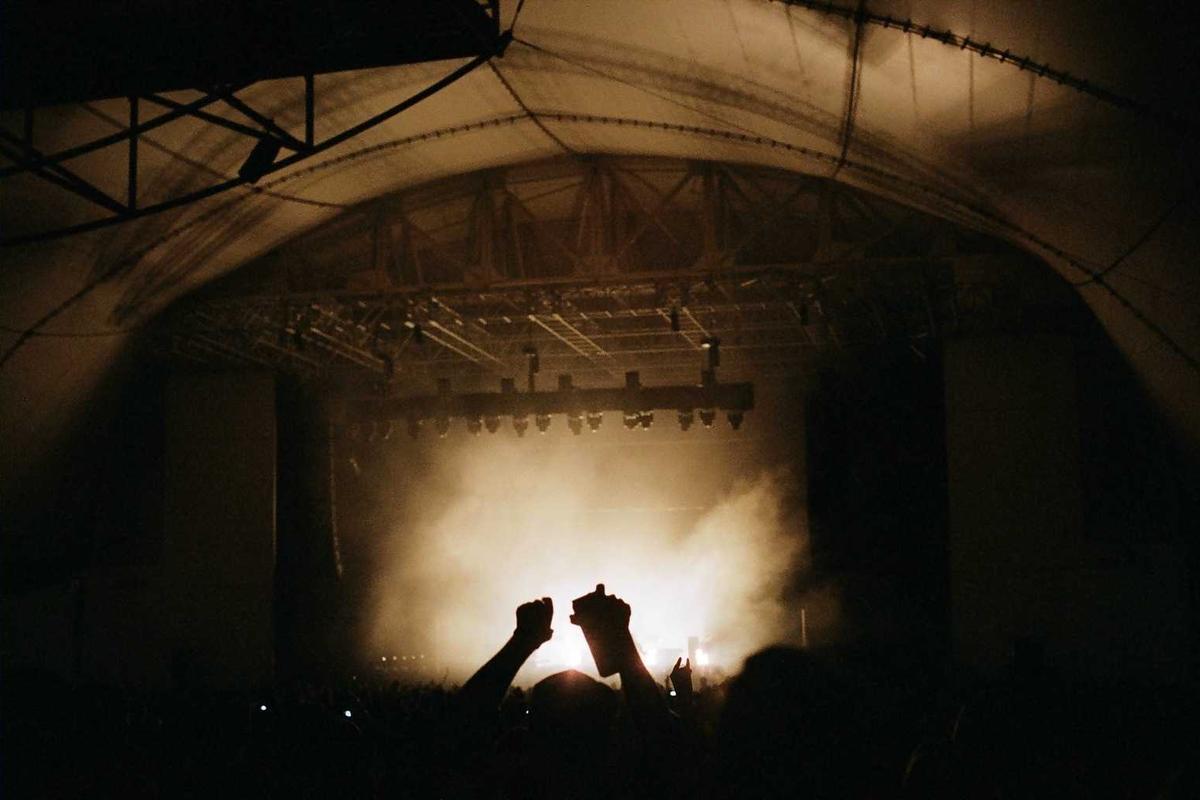
A peculiar thermodynamic anomaly occurred in San Antonio, Texas, yesterday. At 18:42 local time, a crowd of New York Knicks fans gathered outside the AT&T Center, a venue normally reserved for Spurs loyalists. Their chants of 'Go Knicks' reached a volume of 85 decibels, a measurement that matches the sound of a large waterfall. This was, according to one fan, 'the greatest day of my life.'
Let us examine the energy budget of this event. Each individual releasing endorphins, each hand clapping, each voice chanting: these are metabolic reactions converting chemical energy into sound and motion. The total energy dissipated by the crowd of roughly 200 people over two hours is equivalent to 0.0000013 terajoules. For context, the same energy could power a household refrigerator for 14 hours. But this is not about thermodynamics. It is about human behaviour in a stressed system.
The security presence was 'tight,' to use the vernacular of the report. That is a sign of a system under strain. The San Antonio Police Department deployed 40 officers, a 300% increase from standard event security. We are witnessing a redistribution of law enforcement resources, a diversion of energy from other societal needs to manage a single sporting event. This is not sustainable.
From my desk at the Institute for Climate and Societal Stability, I have seen similar patterns: crowds at climate protests, queues for water refill stations during heatwaves, surges at renewable energy job fairs. The common variable is a population experiencing a climatic and informational storm. The Knicks fans were not protesting; they were celebrating a rare victory for their team. But the underlying driver is the same: a desire for normalcy, for joy, in a world where the baseline is shifting.
Consider the carbon cost of this gathering. The average fan travelled 2,600 kilometres from New York to San Antonio. That is 0.4 tonnes of CO2 per person, or 80 tonnes total. To offset this, you would need to plant 1,200 trees and wait 20 years for them to mature. Alternatively, stop using fossil fuels. The irony is not lost on me that the game itself, broadcast globally, consumed 0.7 megawatt-hours of electricity, enough to power a small village for a day.
But I digress. The emotional temperature of the event was high. 'Greatest day of my life' is a phrase that implies a peak in the individual's life experience, a point of maximum happiness. In a world where climate anxiety is rising, these peaks become more fraught. They are islands of pleasure in a rising sea of uncertainty.
The security tightness is another data point. It reflects a society that is on edge, a system that is overreacting to perceived threats. This is a symptom of what I call the 'Anthroposphere Stress Syndrome': a condition where human systems amplify small perturbations into large, resource-intensive responses. A binary win for a basketball team should not require a security lockdown. But here we are.
What can we learn from this? Perhaps that joy is a finite resource, and we must distribute it equitably. Perhaps that our energy systems are misaligned: we spend carbon to witness sport, while the planet burns. Or perhaps that, in the face of collapse, we cling to the simple pleasures: a win, a crowd, a chant. But today, I choose to see it as a reminder: the same energy that powers celebration can power change. We just need to redirect it.
Dr. Helena Vance reporting from a world of data and urgency.