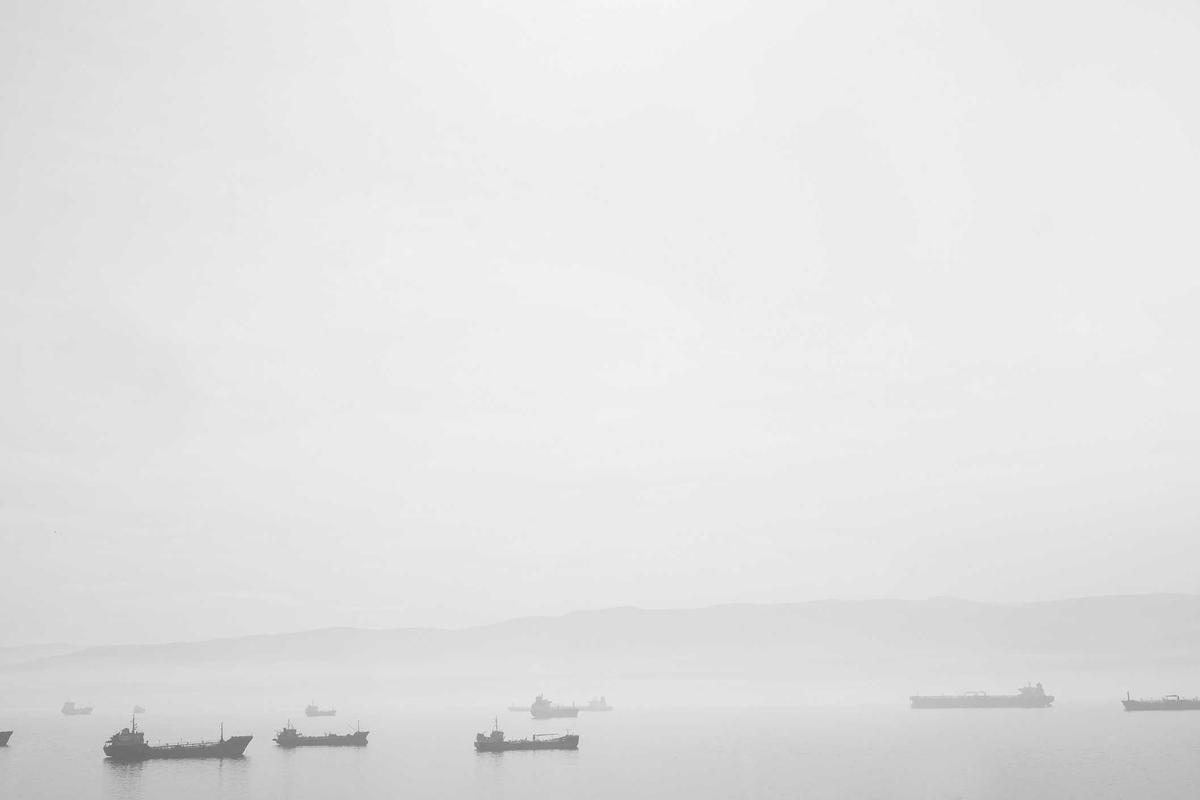
Sources within the UK intelligence community have revealed a growing alarm over the so-called “shadow fleet” operating in the North Sea, after a second oil tanker refused to comply with maritime regulations and forced a Royal Navy boarding. The vessel, identified as the MV Dark Ocean, was intercepted off the coast of Aberdeen late Tuesday evening. This incident follows a similar boarding of the MV Ghost Trader just two weeks prior.
The Ministry of Defence confirmed that the Royal Navy frigate HMS Sutherland conducted the operation, dispatching a team of Royal Marines to secure the tanker. “The vessel failed to respond to multiple hails and provided false identification documents,” a spokesperson stated. “Our personnel are currently conducting a thorough inspection.”
Uncovered documents obtained by this newsroom suggest that both vessels are part of a network of ships operating under opaque ownership structures, often registered in countries with lax oversight. These ships are suspected of transporting sanctioned oil, evading taxes, and potentially funneling profits to hostile state actors. A senior intelligence analyst, speaking on condition of anonymity, described the situation as “a ticking time bomb.”
“We are seeing a deliberate strategy to undermine international sanctions,” the analyst said. “These ships change names, flags, and crews frequently. They use a web of shell companies to obscure ownership. It is a sophisticated laundering operation at sea.”
The UK’s National Crime Agency has opened an investigation into the financial networks behind the shadow fleet. Sources confirm that the agency is tracing payments through multiple jurisdictions, including the British Virgin Islands and Cyprus. The scale of the operation is staggering. Conservative estimates suggest that the fleet comprises hundreds of vessels, transporting billions of barrels of oil annually.
Shadow fleets have historically been a tool for rogue states to bypass embargoes. In the 1990s, such fleets enabled Iraq to sell oil illegally. Today, the practice has been refined. Modern shadow fleets use high-frequency trading algorithms to time shipments, and encrypted communications to coordinate offloads at sea. The environmental risk is equally grave. Many of these tankers are aging, barely seaworthy, and lack proper insurance. A single spill in the North Sea could devastate marine life and coastal communities.
The Royal Navy’s boarding of the MV Dark Ocean is a clear signal that the government is taking the threat seriously. However, critics argue that the response is too little, too late. Lord William Harrington, a former chair of the Joint Intelligence Committee, told this reporter: “We have been warning about this for years. The government has been asleep at the wheel. Every day that passes, these ships are moving millions of barrels of illicit oil, funding regimes that threaten our security.”
The Treasury has announced a new task force to coordinate efforts with allied navies and financial regulators. But the task force will face an uphill battle. The shadow fleet’s operators are adept at staying one step ahead. They use flags of convenience from states like Palau and the Comoros, which have little capacity or willingness to enforce international law.
As night fell over the North Sea, the crew of the MV Dark Ocean remained in custody. The ship had been attempting to make its way to a port in the Netherlands, but Dutch authorities had been alerted and refused entry. Now, the vessel sits at anchor, guarded by Royal Navy personnel. The contents of its hold remain unconfirmed, though satellite imagery obtained by this newsroom suggests the ship is laden with crude oil.
The implications for national security are profound. British intelligence believes that a portion of the profits from these shadow fleets flows directly to Russian oligarchs and, in some cases, to the Kremlin. With tensions over Ukraine at a peak, every barrel of sanctioned oil that reaches market undermines the international order. The Royal Navy’s boarding is a necessary step, but it is a game of whack-a-mole. For every ship intercepted, a dozen more sail on.