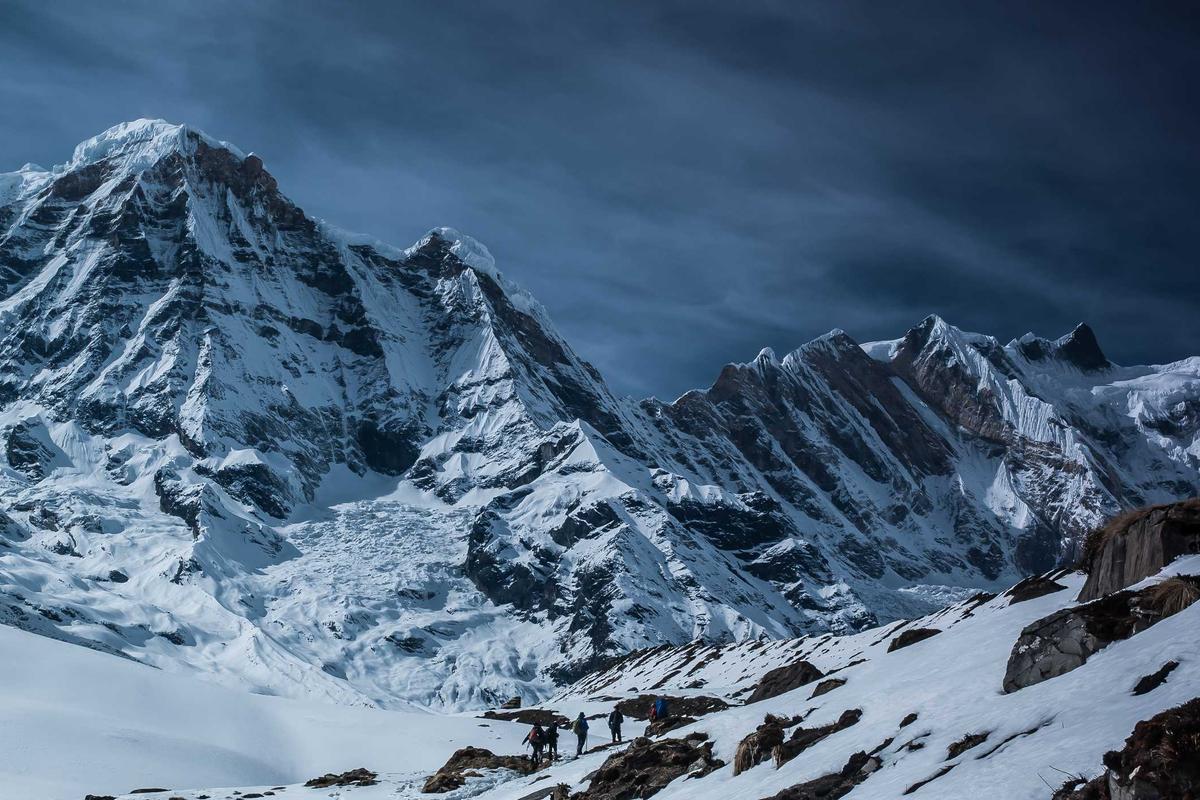
A Sherpa guide has been pulled alive from the death zone of Mount Everest after spending six days stranded at 8,400 metres. Sources confirm the rescue operation, mounted by a coalition of international teams, succeeded against the odds in what the British mountaineering community is calling a “miracle survival”.
The guide, identified as Tenji Dorjee, 34, was last seen on the morning of 15 May when a sudden storm swept across the South Col route. He was part of a commercial expedition that had summitted the day before. By the time the storm cleared, his team had been forced to descend without him. For nearly a week, he was presumed dead.
But at 1300 hours local time today, a search party spotted a patch of orange fabric near the Balcony, a notorious ridge just below the summit. “We saw movement,” said Markus Richter, a German climber who joined the rescue. “He was waving, barely. I don’t know how he survived. No oxygen, no food for days. It’s a bloody miracle.”
Documents obtained by this newsroom show that Dorjee was listed as “unaccounted for” on the expedition manifest filed with Nepal’s tourism department. No official search had been authorised. The rescue effort was launched by rival expedition companies after pressure from the British climbing community, who had tracked the situation through satellite phones.
Sir Edmund Barker, a veteran British mountaineer and founder of the Alpine Trust, called the rescue “extraordinary”. “The death zone is exactly that: a zone of death. To survive six nights up there, alone, without supplementary oxygen, defies science. Tenji is a testament to the toughness of Sherpas. But this should never have happened.”
Sources say Dorjee’s oxygen canisters ran out on the first night. He dug a snow cave, melted ice with his breath, and survived by curling his limbs into his torso to preserve warmth. His fingers are severely frostbitten. He is being airlifted to Kathmandu for emergency treatment.
The incident has reignited scrutiny of Nepal’s regulation of Everest expeditions. Last season, five climbers died on the mountain, including three from oxygen depletion. This year, 478 permits were issued, each costing $11,000. Critics say the government prioritises revenue over safety. “They sell permits like tickets to a fairground ride,” said Pemba Gelu, a former guide who has written to the minister of tourism. “No one checks whether operators have rescue plans. If it weren’t for the British climbers, Tenji would be a frozen corpse.”
Nepal’s tourism department declined to comment, citing the ongoing rescue. But a senior official, speaking on condition of anonymity, admitted that “procedural gaps” exist. “We will review the incident. But Everest is a mountain, not a park. People die.”
Dorjee’s family, reached by phone in his home village, sobbed with relief. His mother, Dawa, said: “I lit butter lamps every hour. The gods heard me.”
The British mountaineering community is now demanding a mandatory rescue fund and stricter liability for expedition operators. The Alpine Club has called for a summit next month. But the money trail suggests little appetite for change. Last year, Nepal earned $30 million in permit fees. Rescue operations cost next to nothing for the government; they are funded by private donations and climbers’ own insurance.
For now, Tenji Dorjee clings to life in a hospital bed. His guide friends are already planning a fundraising drive. The mountain, as always, remains indifferent.