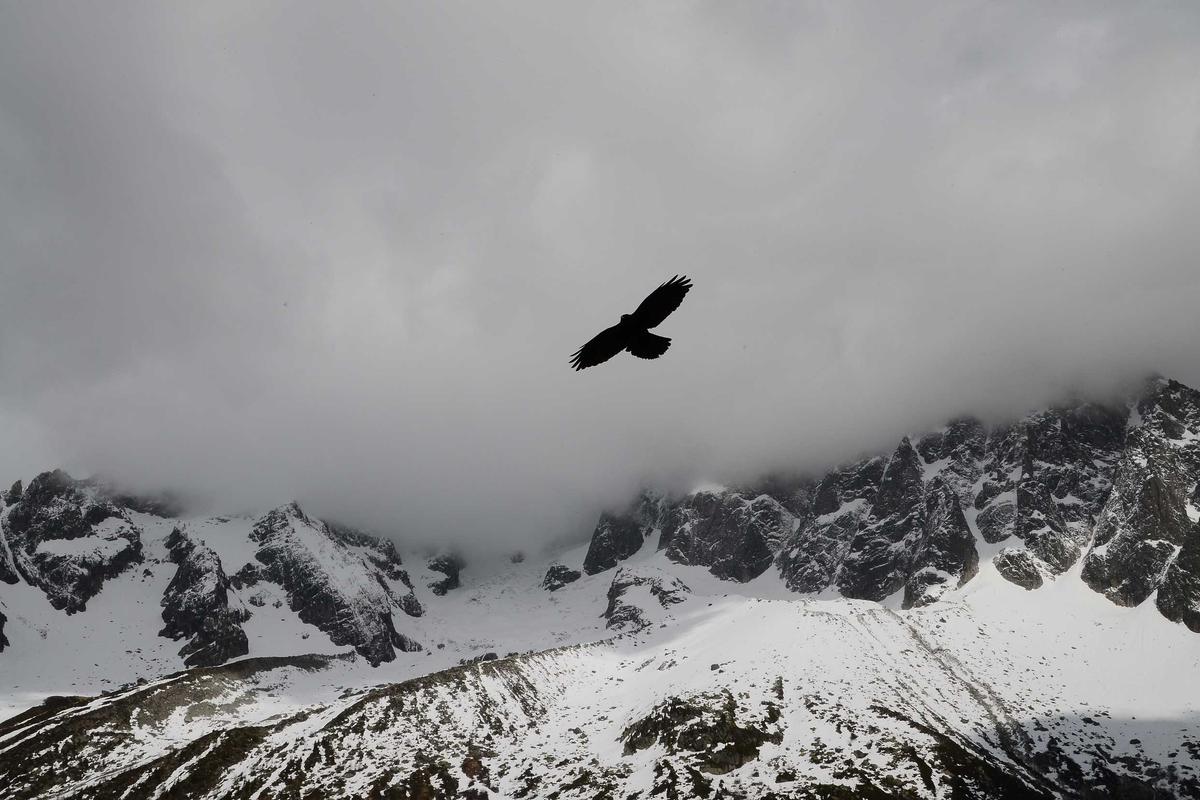
Wildlife conservationists and local authorities in Japan have issued an urgent alert after a bear described as ‘extremely intelligent’ evaded capture following a series of attacks in the northern region of Hokkaido. The creature, which has injured three people in the past week, has outsmarted traditional trapping methods, prompting the deployment of a team from the British Wildlife Tracking Institute, a unit renowned for handling high-risk animal encounters in complex environments.
The bear, believed to be a Ussuri brown bear (Ursus arctos lasiotus), has displayed an unsettling capacity to avoid human detection. Reports indicate it has learned to avoid baited traps, exploit camouflage in dense forest, and even understand the behaviour of tracking drones, ducking into crevices when aerial surveillance overflies. Professor Kenji Takahashi, Hokkaido’s senior wildlife officer, told reporters, ‘This bear is not a brute. It is aware. It watches, it waits, it adapts. We are dealing with a behavioural outlier.’
Following the third attack, a hiker was hospitalised with severe lacerations to the arm. The victim, Hiroto Yamada, recounted how the bear appeared to wait for him to turn his back before charging. ‘It was silent. No sound. Like it knew exactly when to strike.’ This pattern of calculated aggression has left experts baffled. Bears are typically opportunistic, but this individual seems to be actively testing boundaries.
Digital telemetry collars have failed. The bear has evaded every camera trap. Authorities have now deployed a specialist from the British Wildlife Tracking Institute, Dr. Eleanor Grove, who previously tracked man-eating leopards in India and a wolf pack in Siberia. ‘This bear is using terrain to its advantage, and that is a hallmark of high cognitive function,’ Grove explained. ‘We are employing a multi-layered approach using predictive algorithms based on terrain, food sources, and previous sightings. It is a game of chess, not checkers.’
The Japanese government has announced a 24-hour monitoring zone around the Teshio Mountains, where the bear is believed to be denning. Roads have been closed, and residents have been evacuated from three villages. Meanwhile, local hunters are calling for a cull, but conservationists argue the animal may be relocated rather than killed. A petition with over 100,000 signatures has emerged demanding ‘humane resolution’.
Yet the question lingers: what happens when a wild animal learns to outpace human technology? For now, the bear remains at large, its intelligence a mirror to our own blind spots. As drones hover and trackers calculate, we are reminded that nature’s most formidable force is not strength, but the quiet, unwavering intelligence that refuses to be cornered.