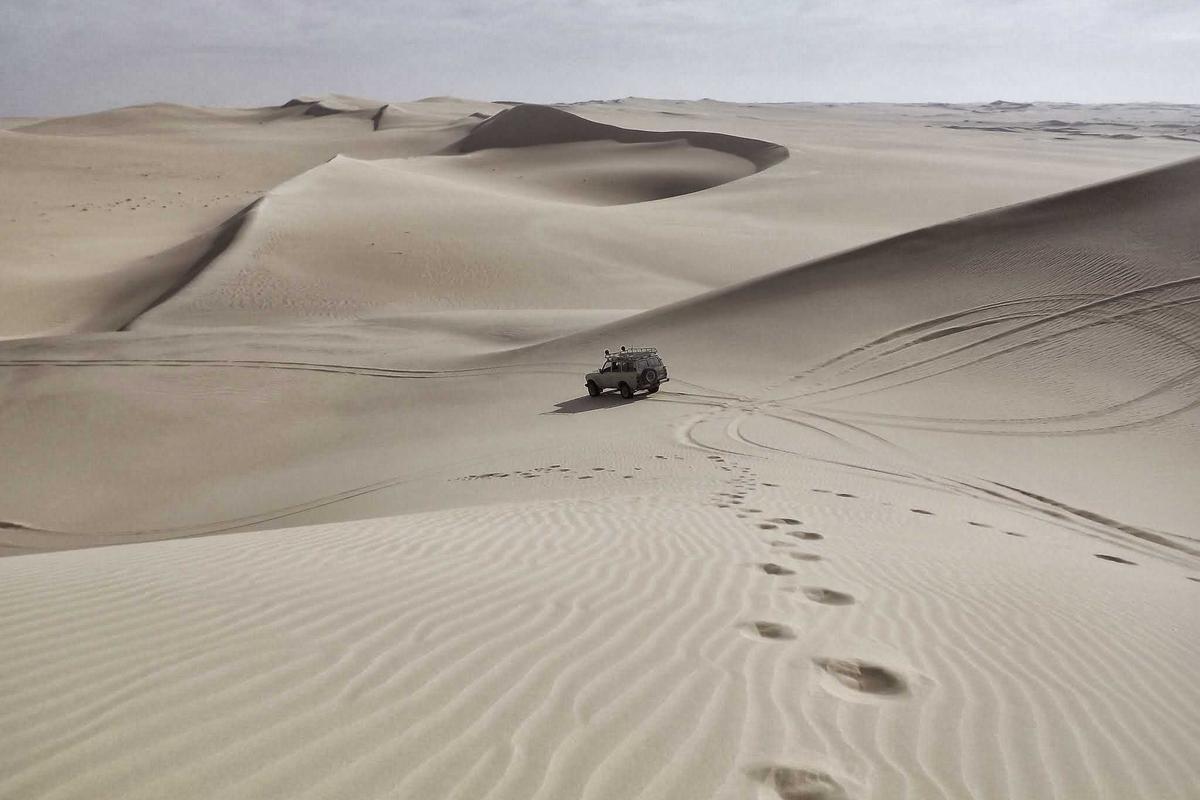
The body of Dr. Elena Vasquez, a 34-year-old astrophysicist who vanished from the Very Large Array observatory in New Mexico nearly a year ago, has been discovered in a remote arroyo approximately 40 miles from the site. The Socorro County Sheriff's Office confirmed the identity late Tuesday, ending a search that had captivated the scientific community and raised questions about safety protocols at remote research facilities.
Dr. Vasquez was last seen on the evening of 14 November 2023 after leaving her workstation to check an anomaly in the array's data relays. Her disappearance triggered a massive search effort involving FBI agents, local law enforcement, and volunteer astronomers. For months, the case remained cold, with investigators finding no trace of her or her vehicle.
Preliminary autopsy results indicate that Dr. Vasquez died of exposure, with no signs of foul play. The location of her body, a steep canyon in the Cibola National Forest, is consistent with the rugged terrain surrounding the observatory. Sheriff Tom Maldonado stated that the investigation has been closed as an accidental death.
Dr. Vasquez was a rising star in the field of radio astronomy. Her work focused on mapping interstellar dust clouds, and she had recently published a paper on the detection of prebiotic molecules in the Orion Nebula. Colleagues described her as meticulous and passionate, dedicated to unraveling the chemical precursors to life.
“Elena was one of those rare scientists who could translate complex data into fundamental questions about our origins,” said Dr. Marcus Kim, a colleague from the National Radio Astronomy Observatory. “Her loss is a profound blow to our community. We are relieved to have closure, but the manner of her passing is heartbreaking.”
The incident has prompted an examination of safety measures at remote observatories. The Very Large Array, located on the Plains of San Agustin, is a collection of 27 radio antennas spread across miles of open land. Workers often travel between antennas late at night, especially during critical observations. A review conducted after Dr. Vasquez's disappearance recommended mandatory GPS trackers and periodic radio check-ins, measures that are now being implemented across similar facilities.
Some in the scientific community have expressed frustration that more was not done sooner to locate her. The arid desert can reach freezing temperatures at night, and her remains were found less than 15 miles from a main road. “It is a stark reminder of how unforgiving this environment can be,” said Dr. Kim. “We rely on technology, but we must never underestimate nature.”
Dr. Vasquez's family has requested privacy as they arrange for her remains to be returned to her native San Diego. A memorial service is planned at the Very Large Array site, where her colleagues intend to place a plaque near the antenna she was studying when she disappeared. In tribute, the array will be turned toward the Orion constellation for one hour of silence at the time of her disappearance.
The loss of Dr. Vasquez is a tragedy that underscores the risks inherent in scientific exploration. As the community mourns, her legacy endures in the data she left behind and the questions she posed about the universe. The search for answers in science continues, but the search for Elena Vasquez has come to a somber end.