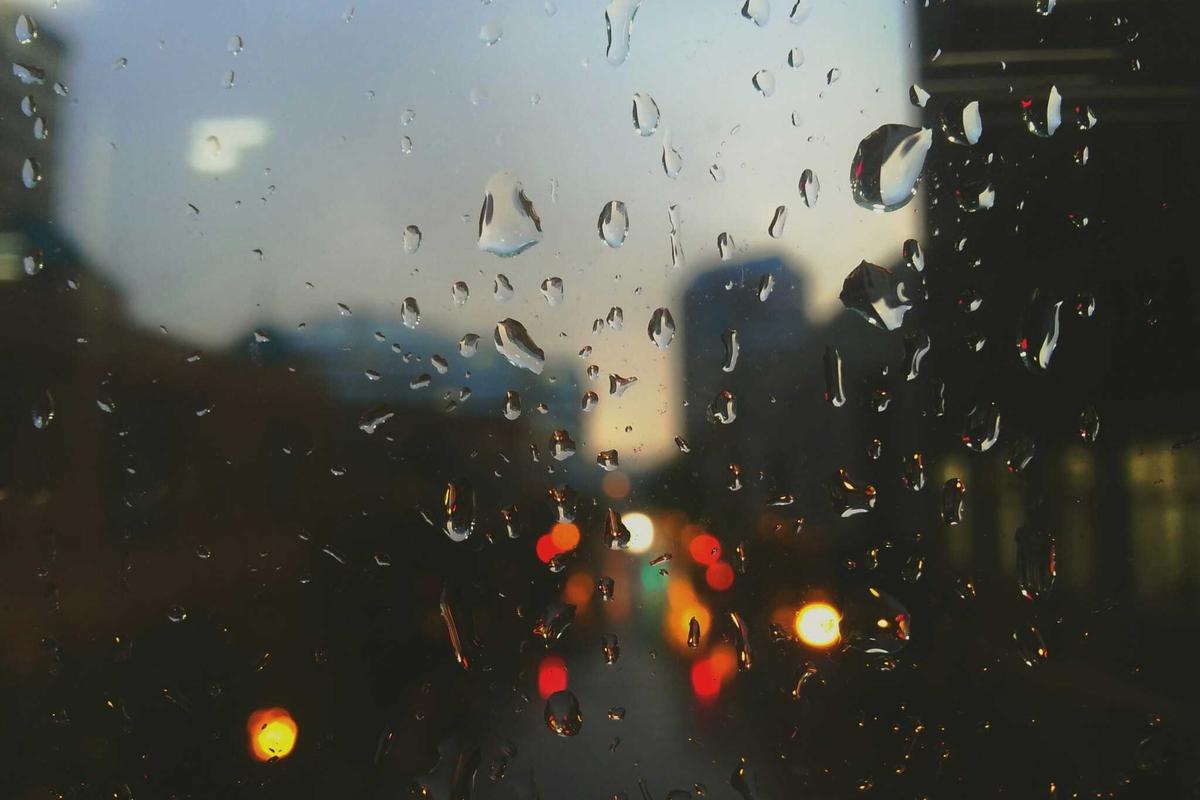
Moscow experienced an unsettling phenomenon this week: black rain. The sooty precipitation fell across parts of the city after a Ukrainian drone strike ignited a massive blaze at the Moscow Oil Refinery, one of Russia's largest. The attack, which Ukrainian officials confirmed as part of ongoing military operations, sent plumes of thick, carbon-rich smoke into the atmosphere. As the smoke condensed and mixed with moisture, it fell as black rain, coating cars, buildings, and streets in a greasy film. The event is a stark reminder: energy infrastructure has become a primary target in this conflict, with consequences that extend far beyond the battlefield.
From a scientific perspective, black rain is a predictable outcome of burning hydrocarbons. The refinery fire released particulate matter, polycyclic aromatic hydrocarbons, and volatile organic compounds. These aerosols act as cloud condensation nuclei, leading to precipitation that carries the contaminants back to the ground. The black rain in Moscow is not a health crisis comparable to, say, the 1986 Chernobyl fallout, but it is a clear signal that the war is escalating in ways that affect civilians directly. The Kremlin has called the strike a 'provocation', but for climate scientists and energy analysts, it is a grim data point in a larger trend.
Europe has been walking a tightrope since the war began. Reliance on Russian gas has been slashed, replaced by Liquefied Natural Gas from the US and Qatar, along with a push for renewables. But the truth remains: energy is the lifeblood of modern civilisation, and when you strike at that lifeblood, the haemorrhage affects everyone. The Moscow Oil Refinery processes about 10 million tonnes of crude annually, supplying roughly a third of the city's fuel. A sustained outage could disrupt Russian logistics, but more importantly, it highlights the vulnerability of all concentrated energy infrastructure. Think of the global energy system as a network of arteries: damage one major node, and the entire system feels the pressure.
The 'energy war' is a double-edged sword. Ukraine's strategy is to impose costs on Russia's war effort by targeting its energy revenues. But refineries are not precision weapons; they are chemical plants with high explosion risk, toxic emissions, and strategic significance. The black rain over Moscow is a localised effect, but consider the broader calculus. If this strike escalates into attacks on Russian nuclear power plants or European pipeline hubs, the conflict could trigger a radiological or economic catastrophe that dwarfs the current tragedy. Europe must ask itself: are we prepared for the environmental and humanitarian toll of a prolonged energy war?
From a climate perspective, this is a textbook example of how geopolitical instability undermines climate action. Every refinery fire, every pipeline explosion, every destroyed solar farm sets back efforts to decarbonise. The International Energy Agency has warned that the energy transition is 'not moving fast enough to guarantee a liveable planet'. Here, we see why. War diverts resources, creates new emissions (the Moscow fire alone released an estimated 500,000 tonnes of CO2 equivalent), and makes nations cling to fossil fuels for security rather than move toward renewables. The irony is thick enough to cut: the same fossil fuels that fuel the war are those we need to abandon to mitigate the climate crisis.
But let's be clear: the black rain is not a climate 'catastrophe' on its own. It is a symptom. The underlying disease is our collective failure to transition away from a high-risk, centralised energy system. Decentralised renewables, microgrids, and distributed storage are harder to knock out in a conflict. They are also more resilient to climate shocks. The lesson from Moscow is not to build better refineries or more impenetrable pipelines. It is to build a system that doesn't bleed black rain when a single target is hit.
As I write this, Muscovites are wiping soot from their windows. The Kremlin is promising retaliation. Energy markets are jittery. And the planet keeps warming. This is the world we have built: interconnected, flammable, and increasingly volatile. The black rain should alarm everyone, not because it is an ecological disaster, but because it is a warning. We must decouple our civilisation from risky energy sources before the next strike causes a truly irreversible black rain.