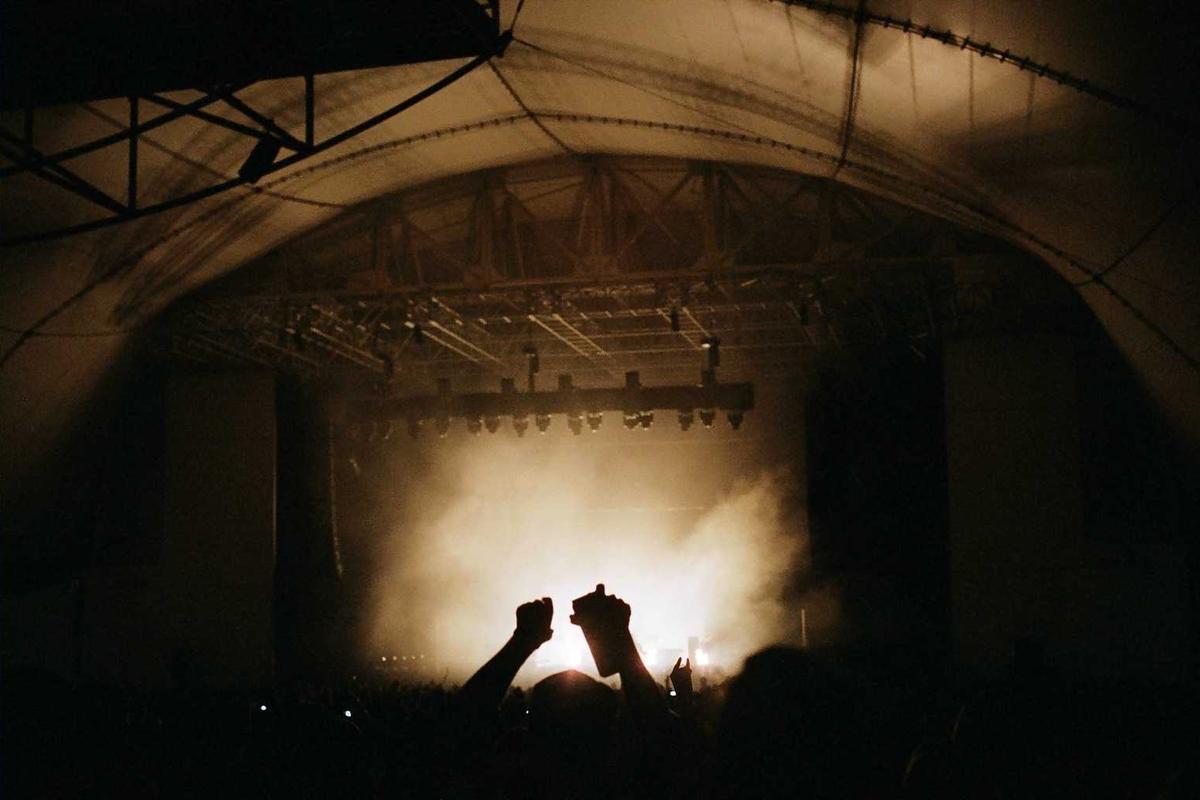
Paris descended into chaos last night as unsanctioned Champions League celebrations turned violent, leading to over 200 arrests and a serious rethink of security protocols for travelling English fans. The unrest, concentrated around the Trocadéro and Champs-Élysées, saw flares launched into crowds, shop windows smashed, and a heavy police response involving tear gas and water cannons. French authorities confirmed that the majority of those detained were local youths, but a significant minority were English supporters whose behaviour has prompted immediate review by UK police and the Foreign Office.
The trigger was the final whistle of a tense semifinal, but the simmering tensions have deeper roots. For years, the experience of attending a major football match abroad has been a patchwork of digital ticketing systems, unregulated fan zones, and real-time social media amplification. In the age of algorithmic friction, where every notification is designed to maximise engagement, the very tools that connect fans can also coordinate flash mobs of disorder. The French interior minister described the night as a “digital-age disorder” where Telegram groups and ephemeral Instagram stories outpaced official communication channels.
UK police liaisons were already embedded in Paris, monitoring a database of known troublemakers with football banning orders. Yet the speed and scale of the mobilisation caught them off guard. “We saw geolocated Snap maps converging on a single square in minutes,” one senior UK officer told me. “This wasn’t spontaneous. It was algorithmically organised.” The challenge now is to design a security architecture that respects civil liberties while adapting to a threat landscape that evolves every 24 hours.
The human cost is not just in broken glass or bruised egos. Three British fans remain in hospital, one with serious head injuries after being caught in a stampede. The experience for the average supporter, the one who just wanted to see Kylian Mbappé play, was a terrifying trial of navigating cordons, conflicting police orders, and the constant hum of misinformation on WhatsApp. The UX of society, as I call it, has a single point of failure: trust. When the crowd loses faith in official channels, they fill the gap with unverified rumours and dangerous self-policing.
This is not a uniquely Parisian problem. Last year’s final in Istanbul saw similar breakdowns. The pattern is clear: large-scale events are becoming stress tests for our digital and physical infrastructure. Quantum computing might one day allow real-time simulation of crowd dynamics, but today we are stuck with legacy systems that cannot parse intent from social signals. AI ethics demands we ask whether predictive policing algorithms trained on historical data will unfairly target certain nationalities or fan cultures.
The UK’s response will likely involve a new layer of digital sovereignty: a mandatory app for travelling fans that aggregates official information, emergency contacts, and behaviour alerts. Critics will cry surveillance state, but defenders will point to the 200 arrests as evidence that something must change. The tension between security and liberty is not new, but the speed at which it cycles now is unprecedented.
As dawn broke over the Arc de Triomphe, cleaners began scrubbing away the evidence of a night where football’s beautiful game was hijacked by its ugly digital shadow. The real match, the one between freedom and safety, is still in extra time.