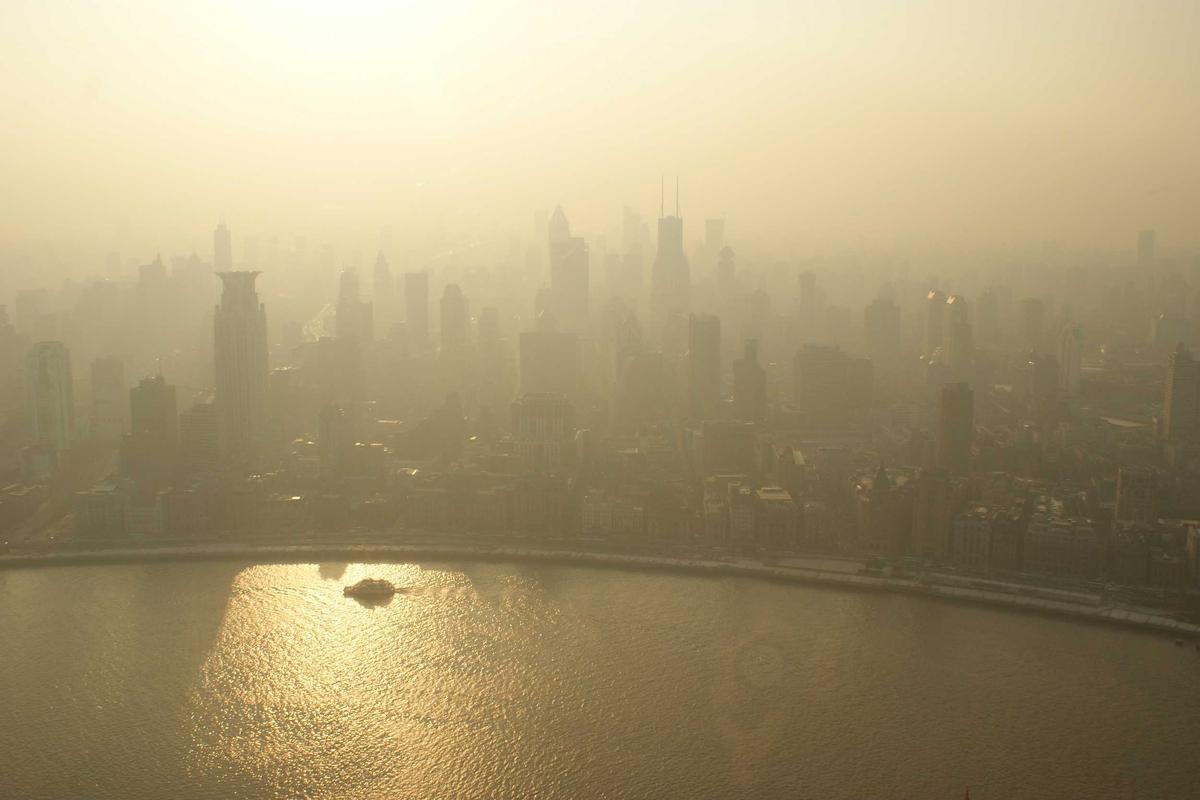
The mercury hit 42.6°C in Paris yesterday, the highest temperature ever recorded in the city during a June heatwave. The French meteorological service, Météo-France, described the event as “punishing” and “exceptional,” attributing it to a stationary high-pressure system that has trapped hot air over western Europe. Across the Channel, the UK Met Office issued a stark warning: the current trajectory of global emissions could trigger irreversible climate tipping points within decades.
“This heatwave is not an anomaly; it is a statistical inevitability under continued warming,” said Dr. Helena Vance, Science and Climate Correspondent. “The physics is straightforward: each tonne of CO2 traps heat, and that heat must go somewhere. In this case, it is manifesting as extreme temperatures that break records with alarming frequency.”
The Paris heatwave is part of a broader pattern. June 2024 is on track to be the hottest June on record globally, following the warmest May. The UK Met Office’s new analysis, published yesterday, focuses on five key tipping elements: the Greenland ice sheet, the West Antarctic ice sheet, the Amazon rainforest, the Atlantic Meridional Overturning Circulation (AMOC), and the boreal permafrost. Their models suggest that if global temperatures rise by 2.2°C above pre-industrial levels—a scenario we are heading towards under current policies—four of these five elements could reach points of no return.
“Think of these tipping points as a row of dominoes,” Dr. Vance explains. “Knocking over one makes the next more likely. For instance, continued melting of the Greenland ice sheet dumps freshwater into the North Atlantic, which could slow or stall the AMOC. A weakened AMOC would alter weather patterns globally, potentially drying out the Amazon and accelerating permafrost thaw, releasing more methane—a potent greenhouse gas—in a vicious feedback loop.”
The immediate human cost is already visible. In Paris, hospitals reported a 40% increase in emergency admissions for heatstroke and dehydration. The city opened cooling centres and deployed mobile misting stations, but the elderly and homeless remain vulnerable. Across Europe, wildfires have erupted in Spain, Italy, and Greece, forcing evacuations and destroying thousands of hectares of forest.
Despite the grim scenario, Dr. Vance emphasises that action is still possible. “Avoiding tipping points requires rapid decarbonisation. We need to halve emissions this decade and reach net-zero by 2050. That means deploying solar and wind at scale, electrifying transport, and investing in carbon removal technologies. The technology exists; the political will is lagging.”
The UK Met Office’s report serves as a wake-up call. “We are not locked into this future,” Dr. Vance concludes. “But the window to act is closing. Paris is burning today; tomorrow it could be the planet’s life-support systems.”