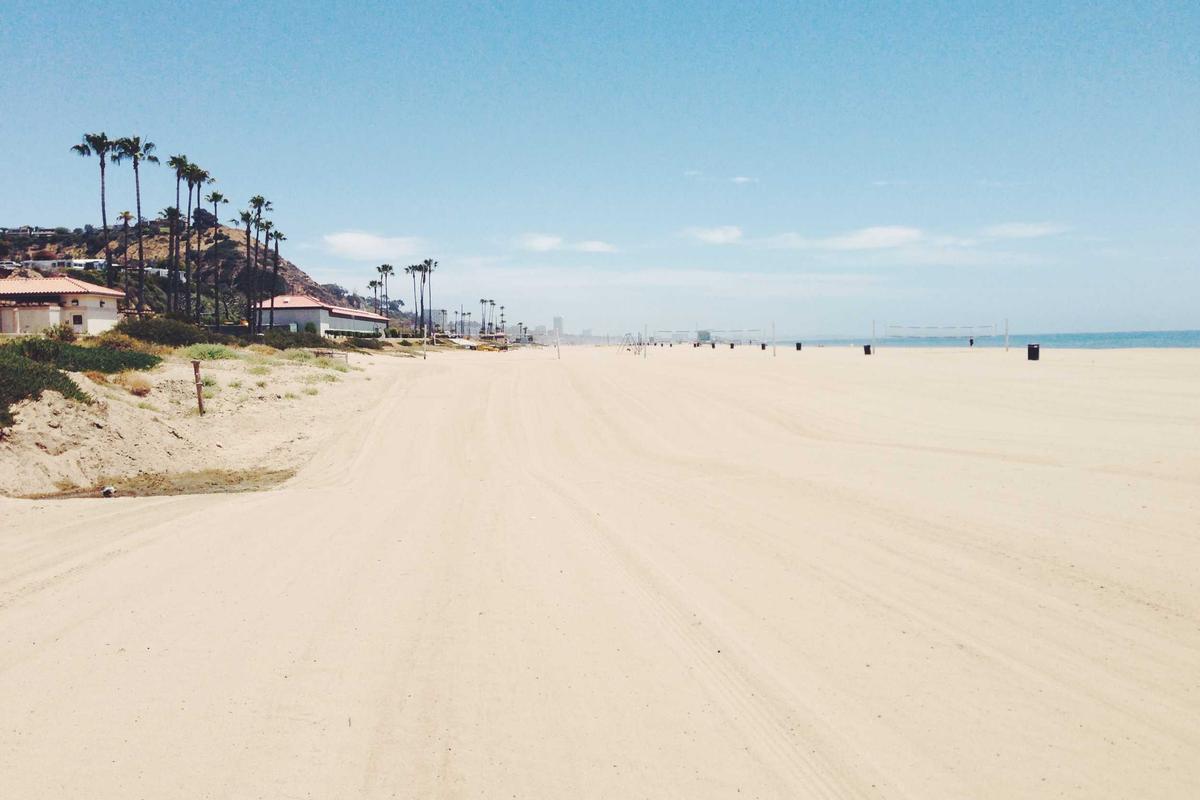
The British seaside on a Tuesday afternoon: a familiar scene of grey skies, bracing winds, and queues for lukewarm chips. But this week, an unexpected swell of controversy has rolled in. A group of Mexican surfers, aiming to break the world record for the largest simultaneous Mexican wave, have been met with derision from British surfing experts, igniting a fresh cultural appropriation row that has divided the beachfront community.
The organisers, hailing from the Pacific coast of Oaxaca, had planned an event on Bournemouth beach involving 500 participants. Their goal: to create a wave of human movement that would ripple through the crowd, a gesture of joy and unity. But British surfers, known for their protective stance on wave etiquette, cried foul. 'It's not just about moving your arms in the air,' said Trevor Naylor, a 57-year-old surfer from Cornwall. 'A Mexican wave, properly executed in a surfing context, requires timing, respect for the tide, and an understanding of localism. This is a cheap imitation.'
The backlash has been swift. Social media erupted with accusations of cultural insensitivity, with hashtags like #WaveRights and #SurfGate trending. Critics argue that the Mexican wave, popularised in British football stadiums but originating in Mexican sporting events, has been stripped of its cultural significance. 'You can't just take a tradition that symbolises communal joy in Mexico and turn it into a Guinness World Record stunt,' said Dr. Helena Croft, a cultural anthropologist at the University of Brighton. 'It's the commodification of collective effervescence.'
On the ground, tensions are palpable. In Bournemouth, locals have gathered to protest with hand-painted signs: 'Surfing is not a gimmick.' Diego Ramirez, the leader of the Mexican group, expressed bewilderment. 'We just wanted to share our love of waves, both in the sea and in the stands. We didn't mean to offend anyone.' But for many, the hurt runs deep. A petition to 'Stop the Wave' has garnered over 10,000 signatures, and the local council has deferred its decision on the permit.
This row reflects a broader cultural shift: the collision of globalised leisure and local traditions. As Mexico exports its wave, Britain guards its surf culture against perceived dilution. 'It's ironic,' said Alistair Moore, a historian of British seaside culture. 'We imported the wave from Mexico via football, but when Mexicans try to reclaim it, we act as if it's ours. That's the coloniser in us.'
Behind the hilarity and outrage lies a serious question: who owns a gesture? The answer remains as murky as the English Channel. For now, the beach is divided. The waves keep breaking, but so does the truce between cultures. As the sun sets over Bournemouth pier, one thing is clear: the tide of cultural appropriation shows no sign of ebbing.