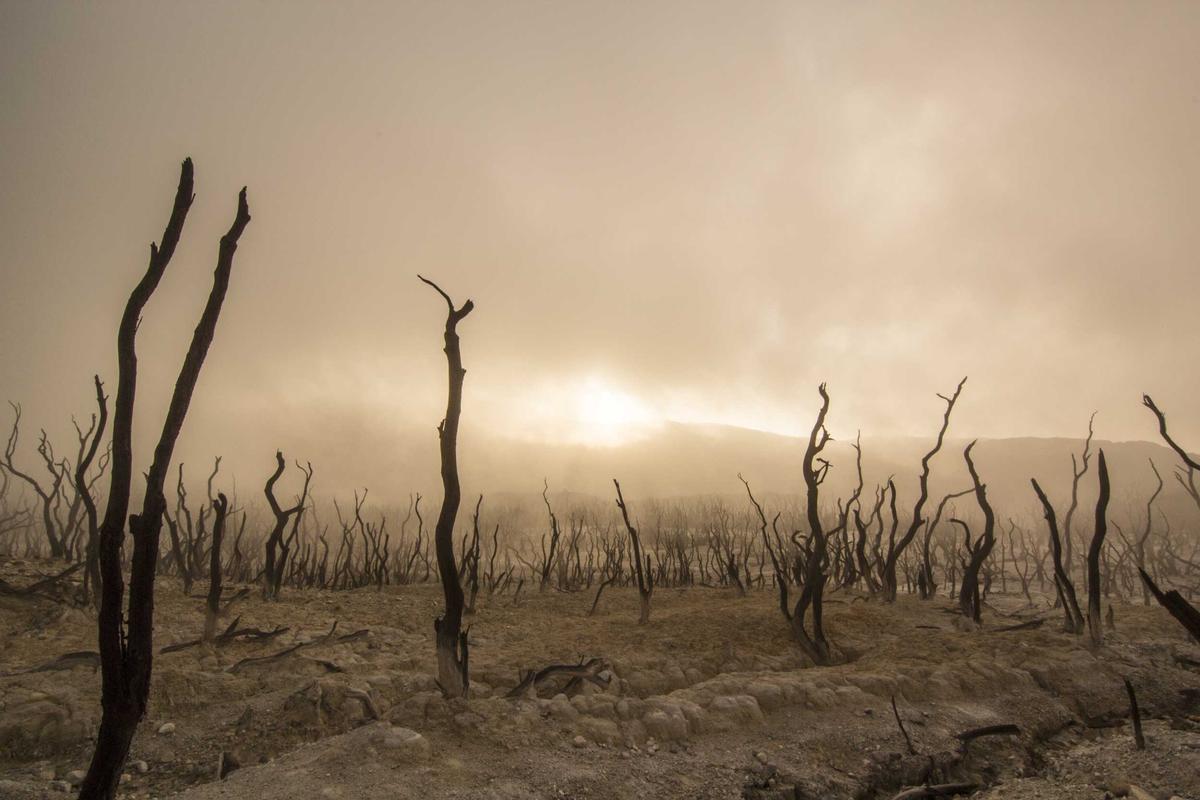
A catastrophic weather event in northern Sumatra has killed an estimated seven per cent of the world’s remaining Tapanuli orangutans, a species already numbering fewer than 800 individuals. Four days of extreme rainfall, consistent with climate model projections for a warmer world, triggered landslides and flash floods in the Batang Toru ecosystem, the sole habitat of these critically endangered primates.
Dr. Helena Vance, Science & Climate Correspondent, reports: The physical reality is stark. A warming atmosphere holds approximately seven per cent more moisture per degree Celsius of temperature rise. When that moisture is released, it falls as torrential rain. In this case, over 500 millimetres fell in 96 hours, an event with a statistical return period of less than one hundred years in the pre-industrial climate. Now such events are becoming commonplace.
The Tapanuli orangutan (Pongo tapanuliensis) was only identified as a distinct species in 2017. Their habitat is a fragmented patch of highland forest, elevation 300 to 1,100 metres. The rain caused multiple debris flows that swept through the steep valleys where the orangutans live in isolated groups. At least 55 individuals have been confirmed dead; many more are missing and presumed dead as the terrain remains inaccessible to rescue teams.
This is not merely a conservation tragedy. It is a direct measurement of climate velocity. The Tapanuli orangutan evolved in a stable, moist forest environment. Their reproductive rate is less than one infant per female every seven years. They cannot adapt to a sudden shift in extreme precipitation frequency. The signal of climate change is now writ large in their blood.
The event triggers a cascade: loss of canopy trees, destruction of fruiting trees the orangutans depend on, and fragmentation of social groups. Even survivors face increased competition for food and higher stress levels that suppress reproduction. The population may never recover.
The role of anthropogenic climate change in specific weather events is now calculable. Using an attribution analysis framework developed at the University of Oxford, the return time for a four-day rainfall event of this magnitude has decreased from a one-hundred-year event to a twenty-year event due to the current 1.2°C of global warming. At 2°C, it becomes a five-year event. This is the mathematics of extinction.
Conservationists are now discussing the grim calculus of translocation. But moving wild orangutans is risky, expensive, and requires suitable habitat elsewhere. For the Tapanuli, there is no other forest. Their entire range is less than 1,200 square kilometres, surrounded by agricultural lands and a hydroelectric dam under construction.
The climate alarm is not a metaphor. It is a siren. Every fraction of a degree of warming increases the likelihood of such lethal precipitation. The solutions are known: decarbonise the global economy, protect and restore forests, and invest in community-based adaptation. But the window for action is closing. This is not a prediction. It is a post mortem.