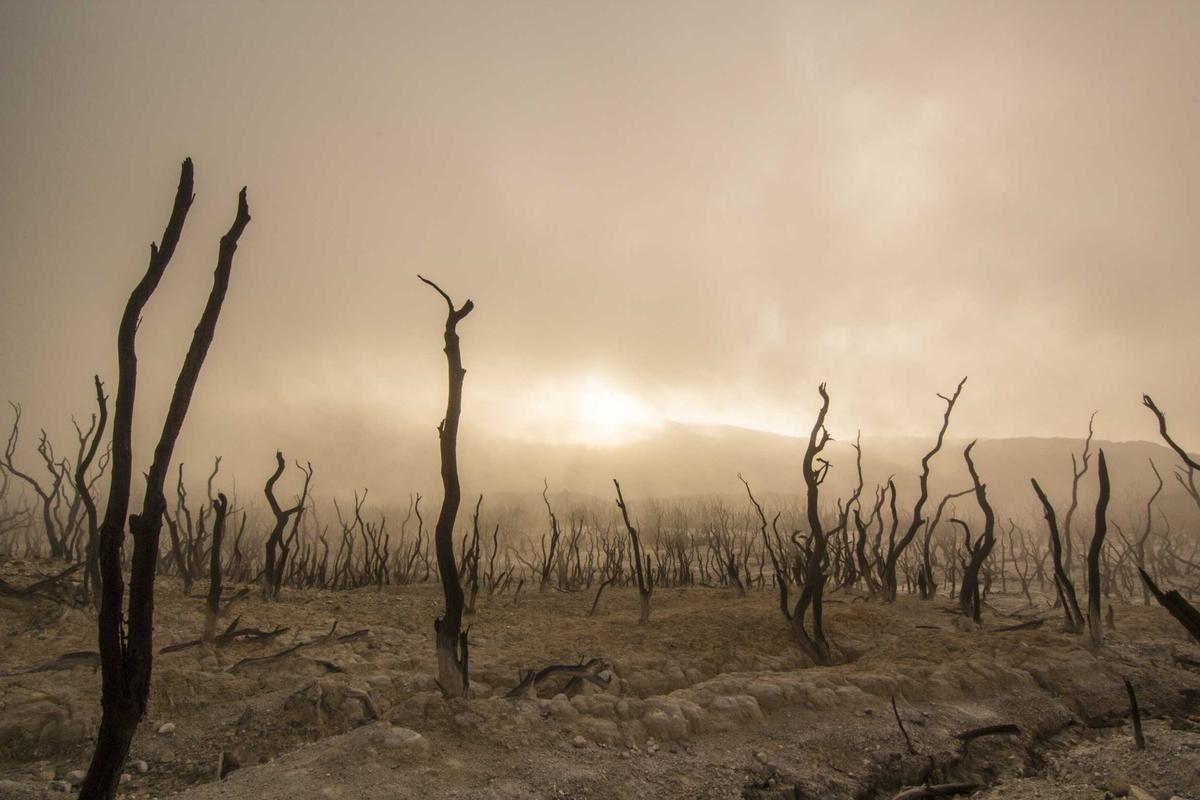
The images are seared into her memory. Orange flames devouring homes. Families fleeing. The smell of ash. That was two years ago, in a small California town. She was there on holiday, visiting a friend. She lost everything except the clothes on her back.
Now, back in Britain, she is building bunkers. Not for nuclear war. For fire.
Her name is Dr. Alice Thornton, a structural engineer from Bristol. She watched helplessly as the town burned. Emergency services were overwhelmed. The fire moved faster than anyone predicted. People died because they had nowhere to go.
Thornton’s solution is radical. A prefabricated fire-proof shelter. Designed to be buried underground or retrofitted into existing buildings. Made from a novel composite material developed at the University of Cambridge. It can withstand temperatures of over 1,000 degrees Celsius for three hours.
“It’s a last resort,” she says. “Like a lifeboat. You hope you never need it. But if you do, it saves your life.”
The first prototype cost £1.2 million. Funded by a consortium of former military officers and climate tech investors. It is now undergoing tests at a Defence Science and Technology Laboratory site in Wiltshire. The results are promising. The Ministry of Defence is “monitoring with interest,” but no contract has been signed.
Critics say it is a vanity project. A solution in search of a problem. Wildfires are not a British phenomenon, they argue. But Thornton points to last summer’s heatwave, when fires broke out in London and Surrey. “It’s coming here,” she warns. “Climate change does not respect borders.”
The real game is in exports. Australia, Greece, Portugal, Canada. All desperate for defensive infrastructure. Thornton’s company, SafeHaven Technologies, is already in talks with the Greek government. A pilot project in Attica is scheduled for next year.
But there is a political dimension. The business secretary, Sir John Madden, has been briefed. He is said to be “enthusiastic.” A source in his office confirmed that a meeting with Thornton is being arranged. The government is keen to promote “British engineering innovation” as part of its net-zero export strategy.
The bunkers are not cheap. A single unit for a family of four costs £45,000. Critics argue that this is a luxury for the wealthy. Thornton retorts: “The cost of a funeral is higher. Or the cost of rebuilding a life.”
She has a point.
Downing Street remains cautious. A spokesperson said the government is “encouraging innovation” but that “every new technology must be thoroughly tested.” That is Whitehall code for: we want to see the political benefit before we commit.
But the mood in the Lobby is shifting. There is a sense that this could be a winner. A classic British stiff-upper-lip story. Tragedy turned into innovation. A woman who saw the horrors of the new world and built something to protect against it.
The real test will be when the next wildfire hits. Not if. When. Because that is when the phone calls will come. And Alice Thornton will be ready.
Watch this space.