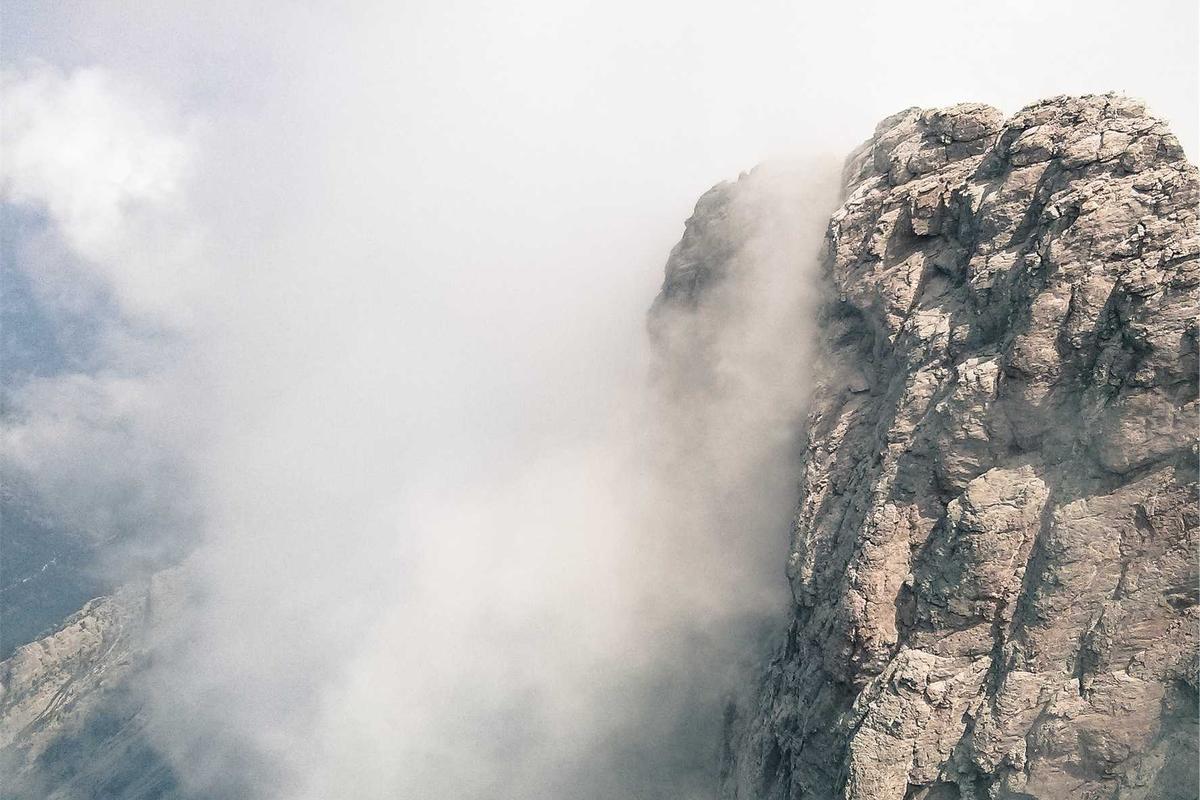
The man known as the ‘Spider-Man of Yemen’ has died after falling into an active volcanic crater on the island of Socotra, highlighting dangerous gaps in adventure tourism safety, according to UK aid agencies. The victim, a 35-year-old climber and local guide, was renowned for scaling cliffs without ropes. He lost his footing while attempting to traverse the rim of the Hawf Crater, a geologically unstable formation in the Indian Ocean archipelago.
Data from the Yemeni Geological Survey indicates that the crater’s rim experiences frequent rockfalls due to thermal expansion and seismic activity. The victim’s body was recovered at a depth of 120 metres. Aid workers from the UK-based charity Yemen Relief have called for urgent safety protocols, noting that Socotra’s unique landscape attracts an increasing number of thrill-seekers.
Dr. Ahmed al-Rashid, a vulcanologist at the University of Sana’a, explained that volcanic craters in the region are poorly monitored. “These formations are not static. The temperature gradient causes micro-fractures that can give way without warning,” he said. “We lack the instrumentation to predict such failures.”
The tragedy underscores a broader issue: the tension between tourism revenue and safety in fragile ecosystems. Socotra, a UNESCO World Heritage site, has seen a 40% increase in visitors since 2020. The island’s volcanic terrain, home to endemic flora like the Dragon’s Blood Tree, is particularly vulnerable to human impact. Energy transitions away from fossil fuels have spurred interest in geothermal tourism, but infrastructure has lagged.
“This is a wake-up call,” said Sarah Thornton, director of the UK-based Adventure Tourism Safety Association. “We are seeing more people wanting to experience active geology, but without proper risk assessment. The biosphere here is under enough stress from climate change without adding careless tourism.”
Thornton’s group has developed a risk matrix for volcanic sites using satellite imagery and ground-based sensors. However, implementation in conflict-affected Yemen remains impossible. The country has been in civil war since 2014, leaving Socotra’s governance unclear. The Southern Transitional Council, which controls the island, has not commented on the incident.
Geophysicist Dr. Elena Vasquez at the University of Oxford compared the situation to glacier tourism. “We see similar patterns in Iceland and New Zealand where tourists ignore safety warnings for dramatic photos. The difference is that Yemen lacks the resources to enforce regulations.”
UK Foreign Office travel advice for Yemen remains ‘do not travel’ due to conflict and terrorism. However, aid agencies report that illegal tourism operators continue to offer trips to Socotra, often bypassing official entry points. The victim was reportedly working with an unregistered tour company.
The incident raises questions about legal liability. “If a British tourist were to die in such circumstances, the UK government would face pressure to intervene,” said Professor James Hawke, an expert in international law at the London School of Economics. “But in a conflict zone, extraterritorial jurisdiction is practically useless.”
Climate change compounds the risks. Rising sea temperatures have altered wind patterns around Socotra, increasing erosion on the island’s cliffs. A 2023 study in the journal *Nature Geoscience* projected that the Hawf Crater’s rim will lose 5% of its mass per decade due to enhanced chemical weathering from higher CO2 levels.
“The planet is changing,” said Dr. Vance. “What was once a stable geological feature is now becoming unpredictable. We need to factor climate into tourism risk assessments, not just tectonic activity.”
The victim’s family has called for a memorial on the crater rim, a request that local authorities have denied on safety grounds. Meanwhile, UK aid agencies are lobbying for an international fund to install monitoring equipment on Socotra’s volcanoes. “We cannot bring back the Spider-Man,” said Thornton. “But we can ensure that others do not share his fate.”