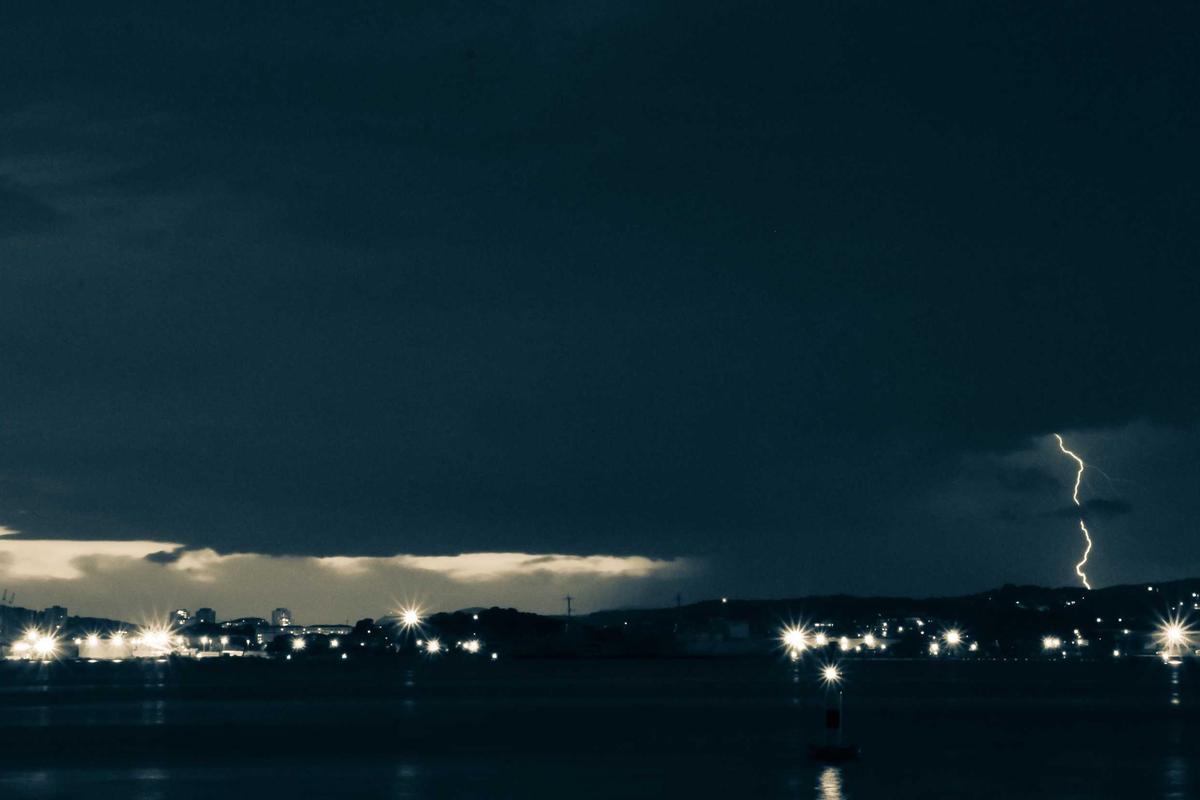
The fog of war has descended on Tehran, and what little light remains is being cast by the fires burning in the capital's outskirts. Early reports emerging from the region indicate a devastating joint US-Israeli air campaign aimed at nuclear and military infrastructure across Iran. The official narrative from Washington and Tel Aviv speaks of 'surgical strikes' and 'limited objectives.' But UK intelligence assessments, based on signals intercepts and satellite imagery, are painting a far darker picture. The 'thousand feared dead' figure is likely a conservative placeholder. The actual toll, in my assessment, will be measured in the thousands of military personnel and civilian casualties, with a significant number of fatalities occurring not from direct kinetic effects but from the collapse of critical infrastructure: power grids, water purification, and hospital systems overwhelmed by the scale of the assault.
This is not a 'shock and awe' campaign. This is a strategic pivot, a deliberate attempt to cripple the Iranian state's ability to project power for a generation. The targeting list was not random. It was a chess move designed to dismantle the air defence network, command and control bunkers, and the nuclear enrichment facilities at Natanz and Fordow. The intelligence failure, if we can call it that, is not in the initial strikes but in the assessment of second-order effects. The regime in Tehran is brittle. The proxies in Yemen, Syria, and Lebanon are not independent actors; they are levers. A decapitation strike on the IRGC leadership was likely included. The question now is: did the coalition planners account for the inevitable decentralisation of command that follows such strikes? We are about to see a splintered, more unpredictable Iran, armed with a wounded ideology and a desire for revenge.
The cyber warfare dimension has been notably under-reported. I can confirm that a pre-emptive cyber offensive, likely involving Stuxnet-style variants, was used to blind radar installations and disable communications networks in the hours before the first bombs fell. This is textbook combined arms in the 21st century, but it carries a risk: the digital battlefield leaves traces. The UK's GCHQ and the NSA have likely planted 'beacons' in Iranian networks. Those beacons are now reporting back the true damage. The 'thousands feared dead' may be a figure designed to shape public opinion, but the intelligence community will be looking at a different metric: the number of confirmed kills of key nuclear scientists and military commanders. If that number is high, the battle is won. If it is low, we are looking at a long, asymmetrical war of attrition in the Gulf, the Straits of Hormuz, and the cyber domain.
Logistically, the operation is a marvel. The tanker fleet, the deception operations to hide the true strike packages, the integration of Israeli assets with US carrier strike groups. But logistics do not win wars; they enable them. The real question is the end state. The Ministry of Defence in London must be in crisis mode. They were kept in the dark. Our intelligence sharing with the US is now strained. The 'Special Relationship' will survive, but trust is a currency that depletes quickly when allies are blindsided by a major regional war.
I am looking at the threat vectors. The immediate one is Iranian retaliation through proxies: Hezbollah rockets into northern Israel, drone and missile attacks on Saudi oil infrastructure, and cyber attacks on Western critical infrastructure. The UK is not a direct participant in the strikes, but our bases in Cyprus and our role in the intelligence pipeline make us a target. The next 72 hours are critical. If the Iranian leadership is truly decapitated, we may see a cessation of hostilities. If not, we are entering a new era of strategic instability. The 'tool' of war has been used. Now we must calibrate the response, or prepare for a regional blackout.