The President of the United States has floated an unexpected architectural ambition: a permanent UFC arena in the style of the Eiffel Tower, to be erected in Washington D.C. The proposal, delivered via a series of late-night social media posts, has left planners, engineers, and climatologists scrambling to assess the feasibility and environmental impact of such a structure.
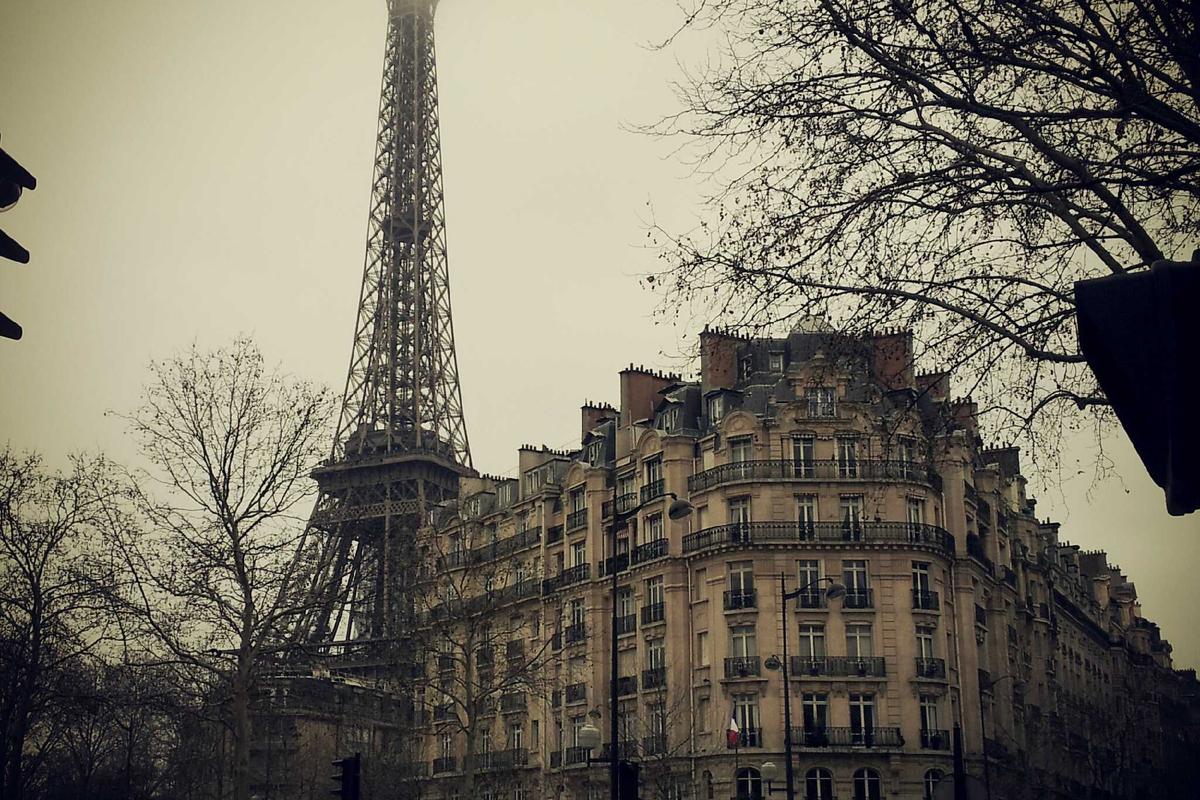
The concept, as outlined, merges two unlikely inspirations: the brutalist spectacle of mixed martial arts and the lattice-girder elegance of Gustave Eiffel's 19th-century masterpiece. The President suggested the tower could host regular UFC events, claiming it would 'bring excitement back to the capital' and serve as a 'monument to American strength.' However, the carbon footprint of constructing a 300-metre steel structure, complete with a regulation octagon, lighting rigs, and seating for 50,000 spectators, raises significant questions in an era of escalating climate targets.
From a materials perspective, the Eiffel Tower consumes approximately 7,300 tonnes of wrought iron. A modern equivalent, scaled to include enclosed spaces and event infrastructure, could exceed 15,000 tonnes of steel. The embodied energy of that steel production alone is roughly 75,000 megawatt-hours, equivalent to the annual electricity consumption of 6,000 households. Add in the operational energy for heating, cooling, and floodlighting, and the project becomes a carbon liability before a single bout takes place.
Geotechnical challenges are equally daunting. Washington's underlying geology is a mix of clay, sand, and gravel, overlaying a relatively shallow bedrock of schist and gneiss. The Eiffel Tower's foundations sink to 15 metres; a D.C. counterpart would likely require deeper piles, possibly to 30 metres, to achieve stability in the soft Potomac basin. The structural wind loading, bearing in mind the significant wind speeds common in the Mid-Atlantic, would necessitate cross-bracing heavier than any existing American monument.
There is also the matter of urban heat island effect. A large metal structure in a dense city reflects sunlight and traps heat, raising local temperatures by as much as 2°C. Combined with the waste heat from an arena's ventilation system, this could exacerbate summer energy demand for surrounding neighbourhoods, already burdened by air conditioning loads.
Proponents point to the Eiffel Tower's own redesignation as a global icon of sustainability; its current owners have installed wind turbines and LED lighting, reducing energy use by 30 per cent. Could a UFC Tower achieve similar credentials? Possibly, but only with integrated photovoltaic cladding and a ground-source heat pump system, driving the upfront cost further beyond the estimated $1.5 billion price tag.
The President's statement did not include a timeline or budget allocation. The National Park Service, which oversees federal land in D.C., declined to comment. The Department of Energy's National Renewable Energy Laboratory, when approached, offered a terse statement: 'We stand ready to advise on efficiency measures, should a formal proposal be submitted.'
For now, the idea remains a rendering on a smartphone screen. But in a political landscape where infrastructure megaprojects have become currency, the notion of a carbon-spewing colossus in the shadow of the Washington Monument is a reminder that the energy transition is not just about replacing power plants. It is about rethinking the very materials and symbols of civic pride. The Eiffel Tower was a triumph of 19th-century engineering built without regard for emissions. Our 21st-century monuments will be judged not only by their height, but by their place in a warming world.
Dr. Helena Vance, Science & Climate Correspondent