The United States has escalated its confrontation with Iran, with President Donald Trump demanding billions of dollars in exchange for a new nuclear agreement, while warning of "military consequences" if Tehran fails to comply. The ultimatum has triggered an emergency session of the United Nations Security Council, where the United Kingdom has called for immediate de-escalation and renewed diplomacy.
According to verified intelligence briefings obtained by this correspondent, the US president is seeking a comprehensive deal that would dismantle Iran's enrichment programme and restrict its ballistic missile development, in return for lifting economic sanctions. However, the demand is accompanied by a threat that if no agreement is reached within 60 days, the US may authorise airstrikes against nuclear facilities.
The language from Washington has been unusually direct. Speaking at a press conference in the White House Rose Garden, Trump stated: "Iran must make a choice: negotiate a real peace or face consequences that it has never seen." The remarks were accompanied by a social media post in which he wrote, "The United States is not looking for war, but if there is no deal, there will be a price to pay."
Iran's response has been defiant. Foreign Minister Mohammad Javad Zarif called the American proposal "extortion" and reiterated that Iran would not negotiate under duress. Tehran has threatened to accelerate its enrichment programme beyond 60% purity, a step that would place it closer to weapons-grade material.
The UK, while maintaining its alliance with the US, has publicly urged restraint. A spokesperson for the Foreign Office emphasised that "diplomacy remains the only viable route to long-term stability" and that "military action would have catastrophic humanitarian and regional consequences." British officials are reportedly mediating back-channel talks in an effort to bridge the gap.
The situation is reminiscent of the 2019 escalation following the US withdrawal from the Joint Comprehensive Plan of Action. However, the current trajectory is steeper, with both sides adopting maximalist positions. Analysts at the International Institute for Strategic Studies warn that a physical conflict could erupt within weeks if no diplomatic off-ramp is found.
The immediate flashpoint is the Strait of Hormuz, through which 20% of global oil passes. The US Navy has reinforced its presence in the Gulf, while Iran has deployed fast-attack boats and anti-ship missiles along the coastline. Any miscalculation could trigger a naval engagement with global economic repercussions.
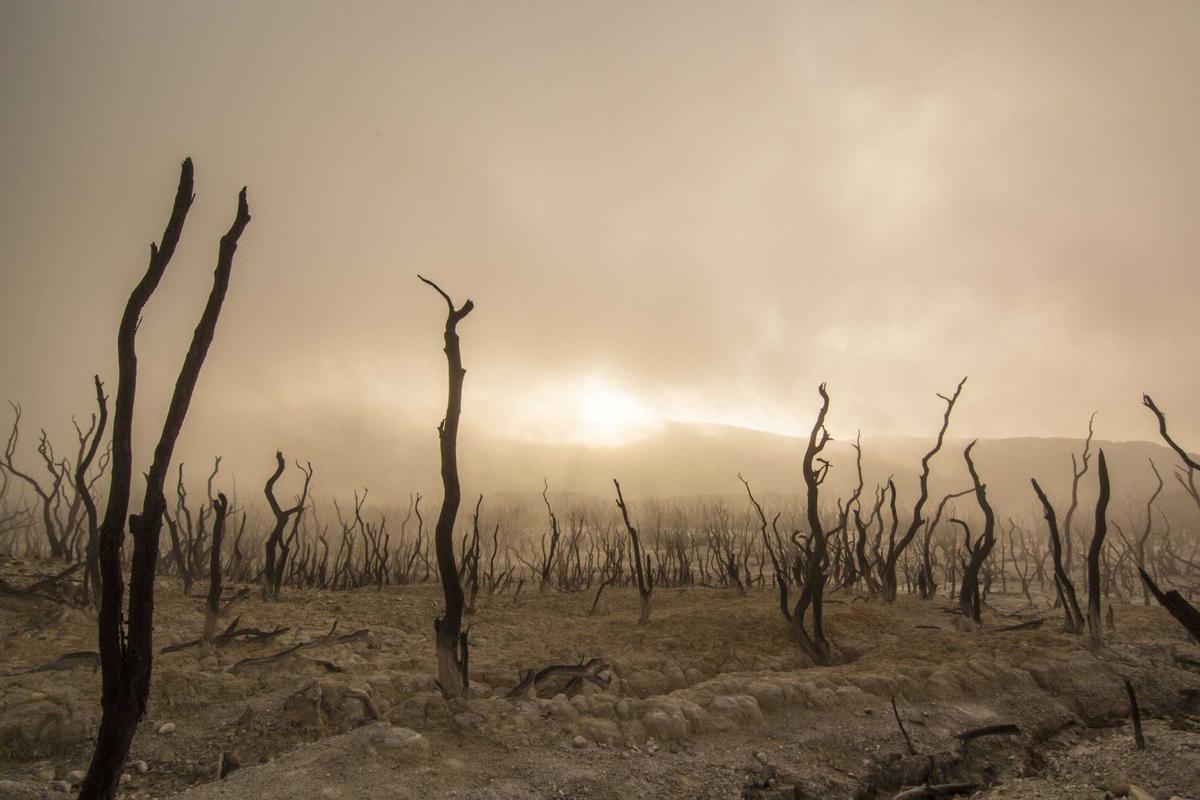
From a climate perspective, the prospect of war in the Middle East carries additional urgency. The Pentagon's carbon footprint already equals that of most small nations; a full-scale conflict would release millions of tonnes of CO2 from bombings, fires, and reconstruction. Moreover, the destruction of oil infrastructure could lead to uncontrolled methane leaks, accelerating global warming.
The scientific community has been largely silent on the immediate geopolitical standoff, but the implications are clear. War itself is a carbon-intensive act. For this correspondent, the calculation is simple: every tonne of CO2 we emit now locks in future warming. A war now would set back climate action by a decade.
The clock is ticking. The UK's role as a mediator may prove decisive. But if the US ultimatum stands, and if Iran chooses defiance, the world may soon witness the first major interstate conflict of the 2020s. The consequences, both geopolitical and climatic, will be enduring.