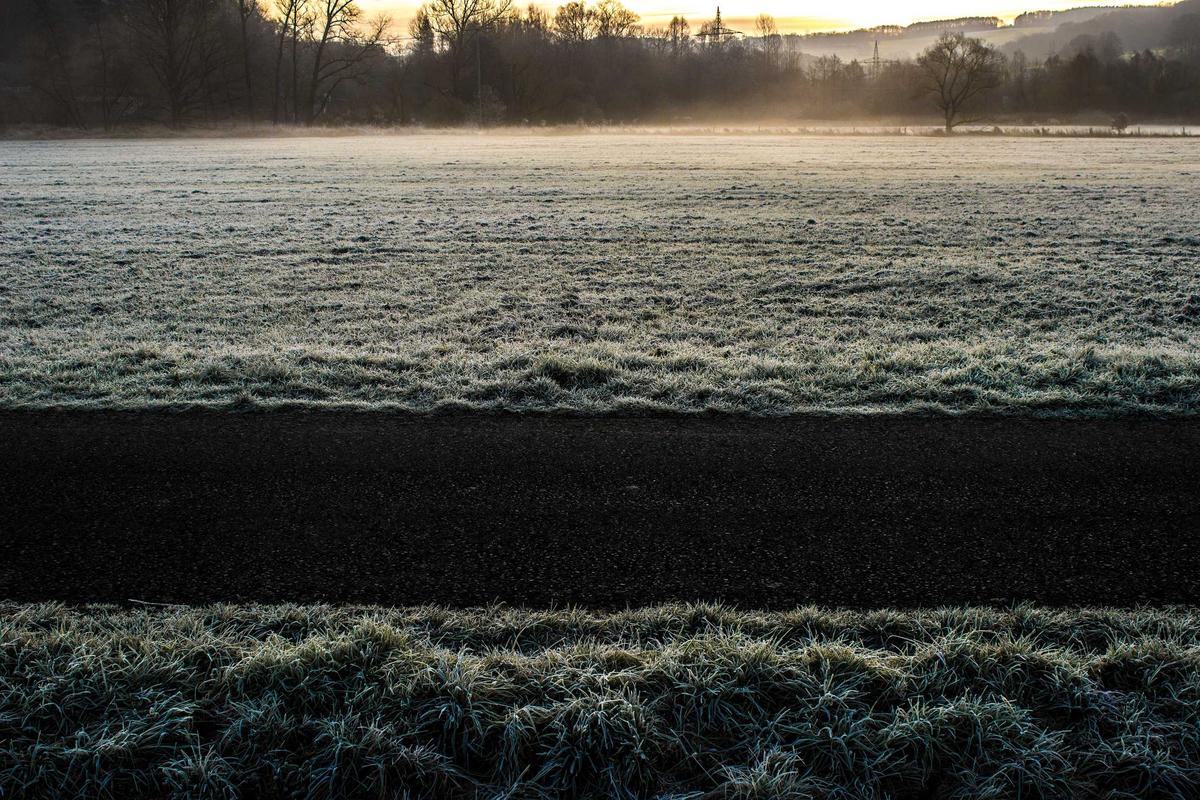
The United Kingdom has just recorded its coldest summer since records began in 1884, a stark anomaly that has sent shockwaves through energy markets and policy circles. While continental Europe swelters under a heat dome that has shattered temperature records across France, Germany and Spain, Britain’s average temperature for June through August has been 13.1°C, nearly two degrees below the baseline. This is not a contradiction of climate change; it is a vivid illustration of its complexity. The polar jet stream, weakened by a warming Arctic, has meandered south, locking cold air over the British Isles while hot air pools over the continent. The consequences are immediate and alarming.
Energy demand has spiked as households and businesses crank up heating in the middle of what should be summer. Natural gas consumption has risen by 15% compared to last year, just as Europe’s gas storage facilities are strained by the ongoing conflict in Ukraine and reduced Russian flows. The UK’s grid, already under pressure from intermittent renewables, has had to rely on coal-fired power stations that were scheduled for retirement. The government’s net-zero targets now look increasingly aspirational as the climate itself throws up barriers to decarbonisation.
Meanwhile, the heatwave across Europe is driving a different set of crises. Crop failures are widespread: wheat yields in France are down 20%, vineyards in Spain are abandoned, and Italy’s Po River has dried to a trickle, threatening agricultural output worth billions. The very infrastructure of modern civilisation is being tested. Energy, water and food systems are all interlinked, and the current weather pattern is stressing all three simultaneously.
The broader biosphere is also sending signals. In the UK, migratory birds have failed to breed as insect populations collapse in the cold. Across Europe, wildfires have consumed forests from Portugal to Greece, releasing carbon that accelerates the warming that fuels more extreme weather. This is what scientists call a ‘non-linear response’ the climate system does not change gradually; it lurches between states.
For the energy sector, the lesson is clear: the future is not a simple linear trend of warming. It is a world of increasing variance, where worst-case scenarios become more frequent. The UK’s cold summer is a dress rehearsal for a climate that does not follow predictions. We must build resilience not just for higher temperatures but for deep, unexpected cold snaps, floods and storms. This requires a diversified energy mix, including baseload power from nuclear and perhaps geothermal, as well as massive investment in storage and grid interconnections.
Technological solutions exist. Advanced battery storage, green hydrogen and next-generation nuclear reactors could provide the flexibility needed to weather such shocks. But deployment is painfully slow. The UK has not built a new nuclear plant in decades, and battery storage capacity remains a fraction of what is needed. The political will to accelerate these transitions is undermined by short-term thinking and the sheer cost of transformation.
The human cost is already visible. In the UK, excess winter deaths are being recorded in summer. The elderly, the ill and the poor are struggling to afford heating bills that have doubled. In Europe, heat-related mortality is climbing into the thousands. This is not a future problem; it is a present crisis.
In my work as a climate correspondent, I have grown weary of repeating these facts. But the physical reality of the world is that the Earth’s energy balance is shifting. The planet is warming, but the effects are distributed chaotically. The UK’s coldest summer is a clear warning: climate change is not a smooth rise in temperatures. It is a systemic destabilisation that will challenge every assumption of modern society.
We are now in an era of ‘calm urgency’. The data are clear. The trends are alarming. But there is still time to act if we accept the scale of the challenge and commit to solutions that match it. Otherwise, the next record will be even more painful.