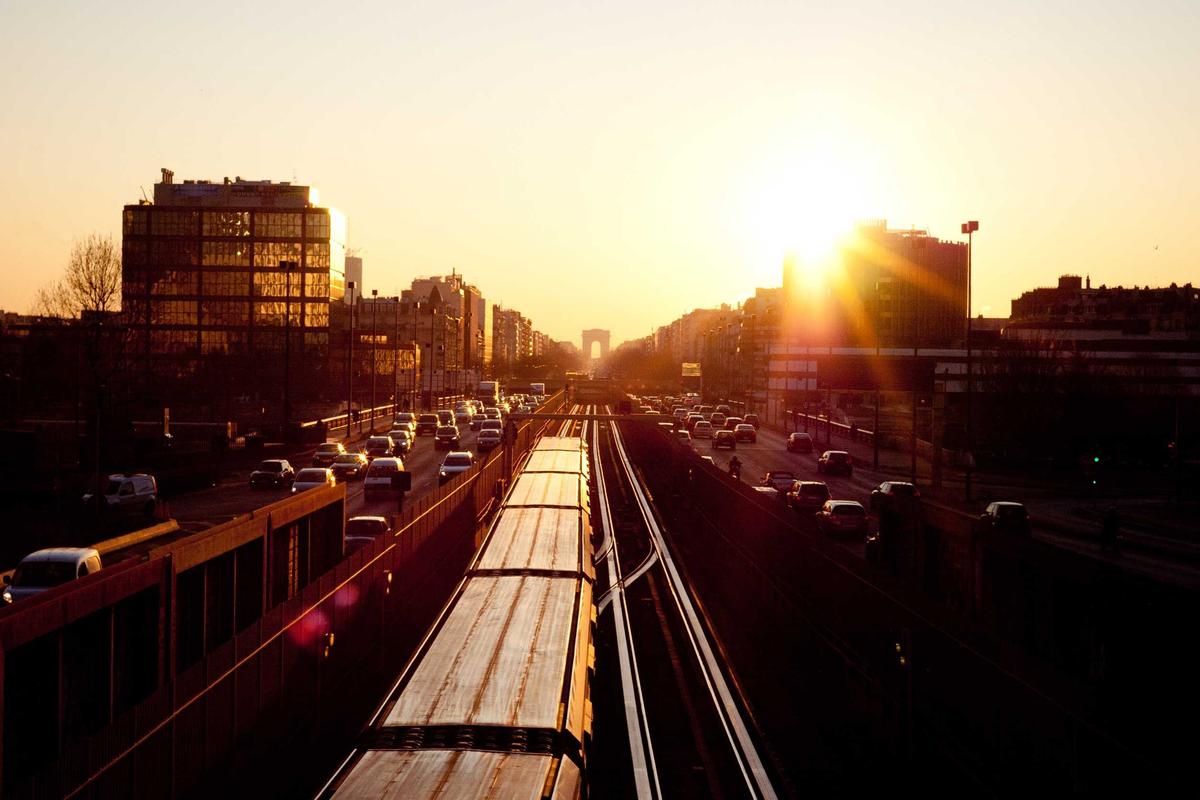
The UK Met Office has issued an unprecedented climate warning as temperatures across Western Europe surge to record-breaking levels. In southern England, thermometers reached 40.3°C, shattering the previous high by more than a degree. France, Germany, and the Netherlands also reported all-time highs, with Paris hitting 42.1°C. This is not a summer heatwave; it is a symptom of a system in distress.
The cause is clear: atmospheric carbon dioxide concentrations now exceed 420 parts per million, a level not seen in over 3 million years. The physics is straightforward: more greenhouse gases trap more heat. The result is a northward shift of the subtropical jet stream, allowing hot desert air to pool over Europe. This is not speculation. It is measurement and modelling.
The consequences are immediate and cascading. In the UK, rail tracks buckled, roads melted, and hospitals reported a sharp rise in heat-related admissions. Across the Channel, wildfires in France and Spain have consumed thousands of hectares. The heat has also accelerated glacial melt in the Alps, threatening water supplies for millions. The biosphere is responding: crop yields are falling, and ecosystems are struggling to adapt.
The Met Office’s warning carries a specific tone: calm urgency. The climatologist Dr. James Richardson explained: “We are now in uncharted territory. What was once a 1-in-500-year event is becoming a 1-in-10-year event. Without rapid emission reductions, this will be the new normal.”
Policymakers have a choice. The International Energy Agency states that existing technologies can halve emissions by 2030. Solar and wind are now the cheapest forms of electricity. Battery storage is scaling fast. The barriers are no longer technical: they are political and economic. The UK government has committed to net-zero by 2050, but current policies fall short. The recent increase in North Sea oil and gas licensing sends the wrong signal.
There is hope in small, specific initiatives. The European Union’s Fit for 55 package aims to cut emissions 55% by 2030. Individual cities are planting more trees and installing cool roofs. But these efforts must be multiplied by a factor of ten. The heat records of this week are not an anomaly: they are a forecast.
As I write this, the temperature in London has dropped slightly, but the long-term trend is relentless. The Earth’s energy imbalance is causing the planet to gain heat at a rate equivalent to four Hiroshima bombs per second. That heat has to go somewhere. Some of it is increasing ocean temperatures, some melting ice, and some warming the air we breathe.
The question is no longer whether climate change is happening. The question is whether we can act fast enough to avert the worst impacts. The answer lies in the decisions we make today. The science is settled. The physics is immutable. The rest is up to us.