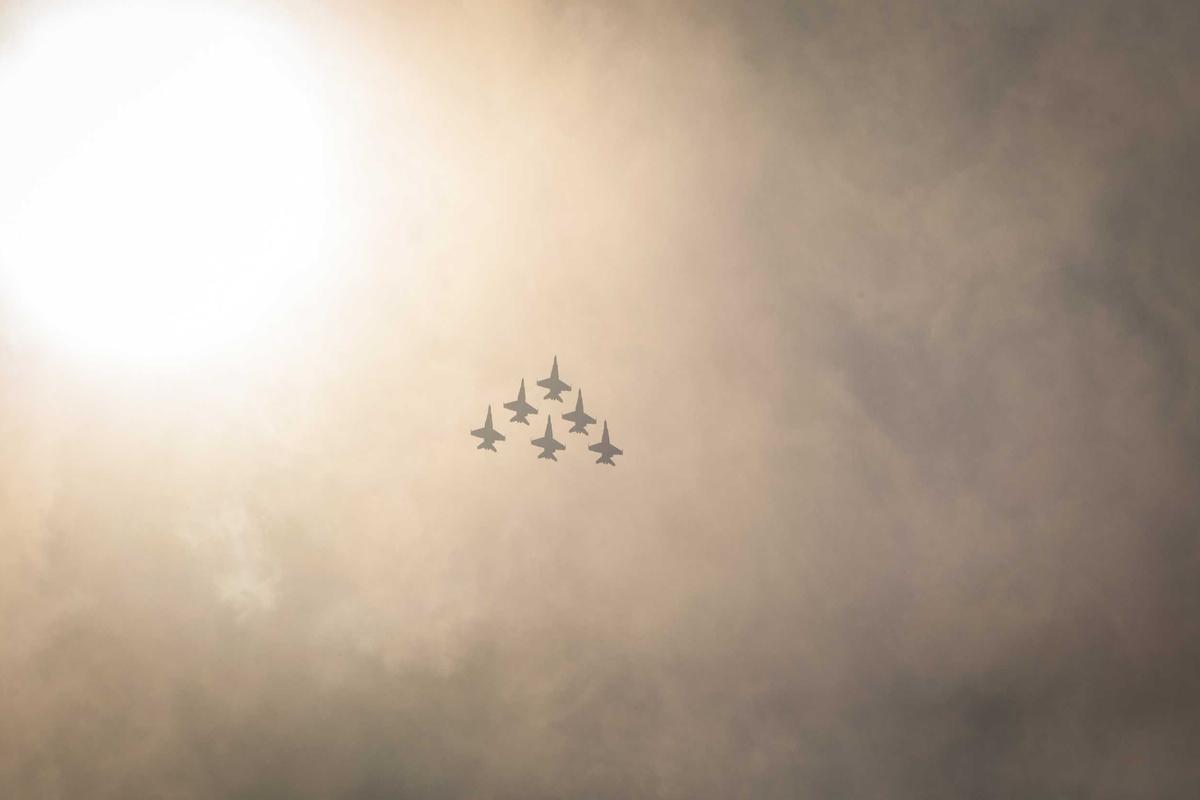
At 4pm yesterday, the US Department of Defence released four grainy greyscale clips of objects that don’t behave like anything in the Boeing catalogue. For three minutes, the world watched a tic-tac shaped craft outpace an F-18 and rotate in ways that defy known physics. But the real story isn’t in the footage.
It’s in the room where the handover happened. Britain, through its Defence Intelligence staff, was the loudest voice calling for the release. Not because we have better data – but because we have a different relationship with the unknown.
While the US military has spent decades treating Unidentified Aerial Phenomena as a sensor problem, the British establishment has quietly treated them as a people problem. The human cost here is not a lost pilot or a crashed drone. It is the cultural disorientation of a public that suddenly must reconcile ‘I want to believe’ with ‘the government is now telling me to believe’.
On the streets of Swindon, where I grew up, people aren’t talking about warp drives. They’re talking about trust. ‘They’ve been lying for years,’ said a retired electronics engineer watching the news in a pub.
‘Now they say it’s real. Why should I believe them about Covid, about the economy, about anything?’ That is the class dynamic no official report addresses.
The declassification may answer technical questions, but it deepens the social fracture between those who see transparency as a gift and those who see it as a tardy admission of incompetence. The cultural shift is immense. For a generation raised on X-Files and close encounter jokes, the ‘reality’ of UFOs feels like a punchline that pulled its own teeth.
Our social psychology is not built for confirmation of the uncanny. We preferred the ambiguity. It allowed us to be sceptics or believers as it suited our identity.
Now everyone is a forced agnostic. The footage itself is mundane – no alien hand waving, no death rays. That is what unsettles.
It is boring, bureaucratic, and thus utterly credible. Britain’s demand for transparency, led by the Ministry of Defence’s new UAP unit, is a fascinating inversion of cultural roles. The US, with its Area 51 mythology, has always been the keeper of secrets.
Britain, with its stiff upper lip and banal officialdom, has become the adult in the room. We said: stop the nonsense. Release the data.
Let the public decide. And the public, faced with four videos that show nothing except the limits of our own technology, is now left with a piercing question: if these are real, what else is? The human element is not in the sky.
It is in the living room. It is in the breakfast table arguments between a father who saw a strange light in 1987 and a daughter who thinks the whole thing is a distraction from climate policy. The social trend here is not a belief in aliens.
It is a belief in the failure of institutions. Whether the objects are drones, birds, or something else matters less than the fact that the US finally admitted it didn’t know. And that Britain, in asking for the truth, has forced us to confront our own need for certainty.
We may not have answers. But we finally have the right questions. And that is a form of progress we should not underestimate.